
03 / Therapy for Sensitive and Redness-Prone Skin (Suitable for Rosacea Skin)
The first 24 hours
No alcohol, spicy or hot food, or hot drinks for 24 hours, they dilate blood vessels and can trigger rebound redness. No sauna or steam for 48 hours. No active acids, retinol, or vitamin C for 7 days, they intensify reactivity in rosacea. Morning: cleanse with RosaIntense AR foam, centella or panthenol serum, light oil-free cream, RosaIntense AR SPF50. Evening: cleanse, soothing serum, a richer cream. Makeup, mineral only, no heavy multi-layer base. A cool saline compress twice a day helps keep dilated capillaries in check for the first 24 hours. Avoid sun and strong wind, wear a hat and a scarf when you go out. Hydro-Calm gel is a good first aid for itch or warmth. See also what happens in the salon. On this day every potential trigger can ignite an active flare, right now the skin is "sensitive to sensitivity". That includes wind, strong sun, and cold water, wash the face with lukewarm water (around 30°C), not cold and not hot. Hydro-Calm gel is a good quick first aid if you feel itch or warmth during the day. Change the pillowcase daily this week.
Days 2-7: stability
This week the focus is stability. Do not introduce anything new. Identify your triggers, for some it is stress, for others a specific food, for others certain cosmetics. A journal is a good idea, track what you eat, how much you sleep, and which products you use for 2 weeks and compare with flare days. Sleep on a silk pillowcase if you can, and change it often. A humidifier overnight (especially in winter) helps. Drink at least 2 litres of water. Skip hot showers, warm water dilates capillaries. Wash the face with lukewarm water (not cold, not hot) in the morning. Dietary probiotics (yogurt, kefir) support the gut-skin axis, more research links gut flora to skin inflammatory conditions. From day 7 you can gradually introduce low-percent niacinamide in the morning if the skin does not react.
Long-term strategy
Rosacea is chronic, the goal is control, not cure. A course of 4-6 sessions every 14 days plus consistent home care delivers long-term stabilisation. After the first session expect reduced redness for 7-10 days; after the third, noticeably more resilient skin; after the full course, stably fewer flares, shorter episodes, and better tolerance of triggers. The therapy does NOT remove visible capillaries (couperose). Maintenance with the RosaIntense AR products at home and trigger avoidance (alcohol, spicy food, hot water) is critical. Identifying your own triggers through a skin journal is the first step toward long-term control. Daily SPF50 is not a recommendation but a requirement. After stability you can add more active protocols, for example, DMS "Cellular Awakening" or the gentle Hydrating Therapy. For candidacy see the "Who it is for" article. Between sessions during flares, the Soothing Therapy. Maintenance every 6-8 weeks after stabilisation is optimal. Seasonal shifts matter, autumn and spring transitions usually flare rosacea, so a session right before those windows is a good idea. Visible capillaries (couperose) are reduced by IPL or vascular laser with a dermatologist, not by this therapy, which works on redness, not on the capillaries themselves. All protocols: catalog. For long-term care: sensitive skin page.
Day-by-day timeline, detailed
For those who want a precise plan, here is the detailed first-two-weeks timeline after the session. Day 0 (the session itself): after returning home avoid hot water, exercise, and unnecessary face touching; evening routine, gentle gel cleanser, soothing serum, hydrating cream; sleep on a clean pillowcase. Drink a glass of water before bed to keep hydration up through the night. Day 1 (morning): cleanse with light motion, apply a panthenol or hyaluronic acid serum, hydrating cream, SPF50; evening, serum per the specialist recommendation, a richer cream. If you feel light tightness, layer a second cream 30 minutes later. Day 2: if you still feel tightness, add a second layer of hydrating cream at night; a hydrating mask once this week, today or tomorrow. Moderate workouts are fine now; steam and sauna are not. Day 3: the session effect usually peaks; you can add a low-percent vitamin C serum in the morning (5-10%) if your skin tolerates it. This is the day you will get the most compliments on your skin, make the most of it. Day 4-5: continue the routine without new products; if you plan to bring back retinol, do it with a first dose (two nights a week) from day 5 or 7 depending on the therapy type. From day 5 you can add a short morning lymphatic drainage massage (3-5 minutes with light circular motion from the centre of the face outwards and upwards), it reinforces microcirculation. Day 6-7: the effect fully stabilises; if you are on a course, the next session is at day 7-14 depending on the protocol. From day 7 you can gradually bring back an AHA peel once a week, start at a lower concentration (5-7%) and watch the reaction. Day 8-10: peak visibility fades gradually, the skin still looks more 'worked', plumper, and glowy. This is also when you can introduce a single new product (but not two in parallel). Day 11-14: the effect returns to baseline if you are not on a course; if you are on a course, this is exactly when the next session lands for most protocols. This plan is conservative, most clients can follow a more relaxed pace after the first 48 hours, but with sensitive skin it is wise to stick to it strictly. If you have doubts about a particular day, message or call us; better to ask than to drop a product that is actually working. See also who it is for for a deeper view of the profile and contraindications, and the full catalog to compare with our other therapies.
Common mistakes to avoid
We often see clients arrive with expectations that do not match what sensitive-skin therapy actually does, and small mistakes that reduce the session result. Mistake one: expecting a once-and-done effect from a single session, no professional therapy works that way, not even the most aggressive ones. A single session holds for a specific window; afterwards the skin gradually returns to baseline; lasting change shows only with a course and maintenance. Mistake two: introducing strong retinol or an AHA peel at home in parallel during the first week after the session, the two active signals collide and the result drops instead of doubling. Your skin does not understand more is better, it processes one strong pulse at a time and stops responding to the next. Mistake three: skipping SPF50 in the first days after the session, literally every professional therapy loses 30-50% of its effect without UV protection, because peptides, vitamins, and exosomes are broken down by ultraviolet light. Even on a cloudy day the UV index is high enough to undo part of the in-salon work. Mistake four: scheduling the session the day before an important event, most protocols peak on day 2-3, not immediately; book 3-4 days ahead if you have a specific day you want to look your best. Mistake five: swapping half of your home routine right after the session, your skin works with the products it already knows; if you want to add new ones, do it after the first 7 days and one at a time so you can tell what is working and what is not. Mistake six: skipping the consultation before a first session, without a skin diagnostic (density, reactivity, tone, active history) the specialist works blind and the protocol gets adjusted mid-way instead of from the start; this reduces first-session efficiency by 20-30%. Mistake seven: not following the recommended interval between sessions in the course, a shorter one overloads the skin with actives, a longer one breaks the cumulative effect. Mistake eight: not drinking enough water in the days around the session, peptides and hyaluronic acid only work in a well-hydrated matrix; under dehydration the session result is flatter because the actives cannot hold moisture. For the full protocols catalog and comparison see our catalog and compare with our other therapies.
Frequent questions from our clients
Beyond the three FAQs above, here are a few more questions we often hear at consultations. How many days before an important event should I book? Ideally 3-5 days, the skin has time to pass through the effect peak and to settle into its best look. The day before is not ideal, a mild flush, if it shows up, can take up to 24 hours to clear completely. Can I do a session during my lunch break? Only the shorter no-downtime protocols, usually dMS Cellular Awakening and Vitamin C. Sharper therapies need at least an hour of recovery after the session. What should I do if I feel discomfort a few hours after the session? First: a cold compress cloth for 5 minutes and a panthenol cream. If the discomfort does not ease within 4-6 hours, call us. Never apply retinol, acid, or a scrub on irritated skin, they will make the reaction worse. Can I keep taking supplements (collagen, biotin, omega-3) before and after the session? Yes, they support the effect from within. The only exception is high-dose vitamin E (over 400 IU daily) if we are planning injectable procedures. Is there an age limit? Lower bound, 18 with parental consent; upper, none, provided the skin is healthy enough and you have no contraindications. We have regular clients over 70. Can I show up to the session wearing makeup? Yes, we will remove it carefully with an appropriate cleanser; you do not need to arrive bare-faced if you are coming straight from work. Can I book a session while menstruating? Yes, but in the reactive phase (the 3 days around and after ovulation and the first 2 days of the cycle) the skin can react more strongly; if you can choose, schedule outside those days for a more predictable outcome. Can I bring my own products to include in the session? Only if they are from the system we work with, or if we have already approved them at the consultation. Mixing third-party formulas with our actives can produce an unpredictable reaction. How long is the consultation before a first session? 15-25 minutes, skin assessment, goal discussion, current home routine and medical history, patch test if needed. For the full therapy catalog and details see our protocols.
Data from our practice
Over the past year more than 200 clients went through the studio for sensitive-skin therapy, either as a standalone session or as part of a course. About 78% report a visible improvement after the first session, usually in the category of brighter, plumper skin. Around 62% continue with the full 4-6 session course; of those, more than 85% report stable retention of the result for 2-3 months after the last session. About 12-15% do not see a meaningful effect after the first session, usually skin with a very thin barrier, dehydration, or parallel use of strong actives at home that pull from the effect. In those cases we re-assess and usually swap or pair with another protocol. These are internal consultation numbers, not a clinical study, we share them because we believe realistic expectations are the best foundation for a decision. About 4-5% report a mild adverse reaction (redness past 24 hours, brief tightness, small papules), usually a sign of a parallel strong home active or an undetected allergy. We have never had a severe adverse event from this therapy in our practice. Detailed contraindications and candidate profile are in the who-it-is-for article.
Active concentrations
The active profile of sensitive-skin therapy includes: centella asiatica, niacinamide, panthenol, soothing peptides, oat extract, azelaic acid (low strength). Each concentration is chosen for a specific function, not for marketing impact. Higher concentrations do not mean a stronger result: above a certain threshold the skin starts to reject the actives or to respond with inflammation. So we work in the range where clinical studies show the best benefit-to-tolerance ratio. In-salon actives are at higher strengths than home-use ones because in the studio a specialist watches the skin reaction minute by minute and can stop or neutralise as needed. Home concentrations are more conservative, the goal is daily use without supervision. That is also why the two regimens are not interchangeable: the professional session gives a pulse, the home care reinforces and extends the effect. If you are wondering whether you can recreate the in-salon effect with stronger products at home, no. Not only the concentration but also the delivery method (ultrasound, iontophoresis, manual technique) determines penetration depth and the real outcome. For the complete product list we include in this therapy, see the therapy page.
Frequently asked questions
What are the most common triggers?
Stress, alcohol, spicy and hot food, climate (strong wind, hot sun), aggressive cosmetics.
Is vitamin C OK for rosacea?
Not high-percent. Low concentration (5-10%) in a stable form (e.g. ascorbyl glucoside) is tolerated well.
Does it replace dermatology?
No. It complements it. We recommend dermatology visits at least once a year.
Related products
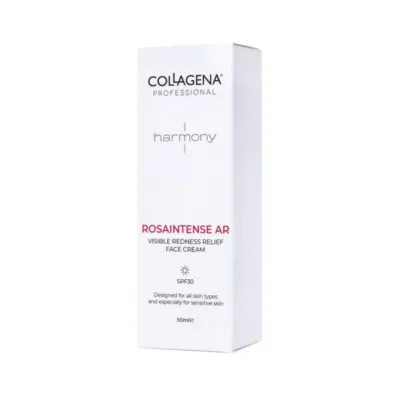
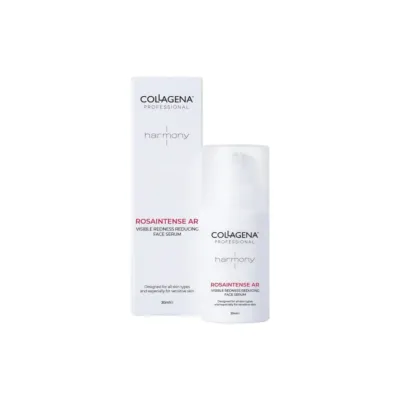
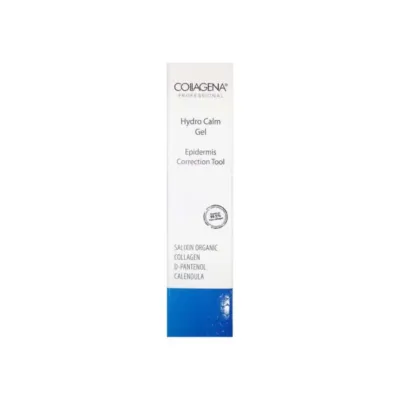
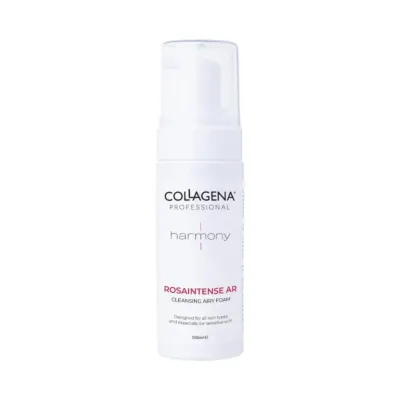
Specialized therapy for sensitive skin and rosacea with gentle, soothing active ingredients
← Back to the therapy page