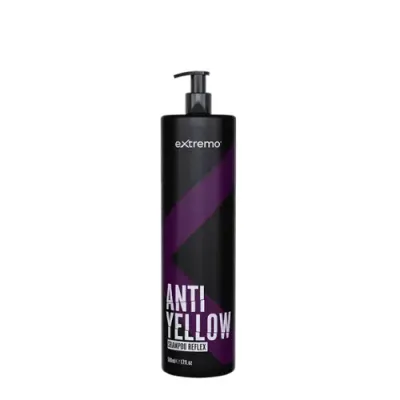
How the Colour Wheel Works
On the colour wheel, violet sits directly opposite yellow. When two opposing colours overlay each other they cancel out and the result reads as more neutral. That is exactly what violet pigments do on yellowing hair.
Why lightened hair turns yellow
When hair is lightened, natural pigment breaks down in stages, and the last tones remaining are yellow and orange. Over time, under sun, water and oxidation, those tones come forward more and more. There is more in our article on colour-treated hair.
What They Actually Do
The pigment deposits on the surface of the strand and stays there temporarily. It does not enter the cortex, does not change the hair colour, and does not repair anything. Each subsequent wash removes it and the effect fades, which is why use is periodic rather than one-off.
The Most Common Mistake
Using it too often or leaving it on too long. Pigment builds up and hair takes on a grey or lilac cast, especially on the most porous sections such as the ends. Reversing that takes a while: accumulated pigment washes out slowly.
A sensible regime
Once every two or three washes is a good starting point, with a regular shampoo the rest of the time. Start with one to three minutes and extend only if needed. On very light or highly porous hair, dilute the shampoo with a little plain conditioner.
Who It Is For
Lightened, blonde, platinum and grey hair, plus highlights. On naturally dark hair a purple shampoo has nothing to act on and does nothing visible. How it fits the wider routine is covered in our hair care routine.
Purple Shampoo or Purple Mask
A shampoo does two things at once: cleanses and tones. That is also what makes it riskier if overdone, because it sits on the hair while you wash and the timing is hard to control precisely.
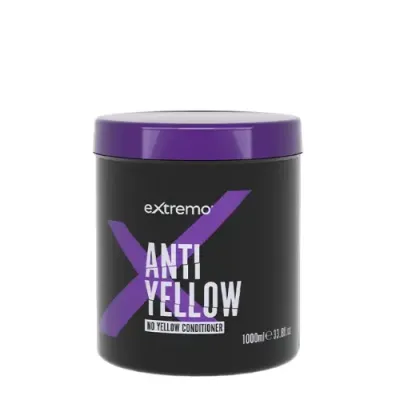
A toning mask or conditioner gives a more predictable result. It goes on already-washed hair, the timing is clear, and it spreads more evenly. On very porous hair that is the safer option, because the pigment does not grab as sharply at the most damaged sections.
How to apply it evenly
Section the hair and start with the yellowest areas, usually around the face and along the lengths, rather than at the roots. On lightened hair the roots are often less porous and take up less pigment, so starting there gives an uneven result.
If You Have Overdone It
The first reaction is usually panic and aggressive washing. The more sensible approach is a few washes with a regular shampoo over the following days: the pigment is superficial and comes out on its own, if not instantly.
Resist the temptation to bleach again to remove the cast. That adds fresh damage to hair that has already been lightened, and creates a bigger problem than a lilac tone that will fade by itself.
What Else Helps Light Hair
Toning solves the optics but not the cause. Yellowing is accelerated by sun, chlorinated water, hard water high in minerals, and styling products that build up.
So a hat in summer, a rinse with clean water before the pool, and an occasional clarifying wash do more than another toning session. Products for light hair are in our hair care collection.
And one clarification that saves disappointment: purple shampoo corrects yellow, not orange. For pronounced orange tones the answer is blue pigment, not violet.