What Niacinamide Is
Vitamin B3 exists in two forms. One is nicotinic acid, also known as niacin. The other is its amide - nicotinamide, which in cosmetics is written as niacinamide. Both names on an ingredient list mean the same molecule and you will see both.
The difference between the two forms is not academic. Nicotinic acid activates a receptor on the Langerhans cells of the epidermis, which leads to prostaglandin release, vessel dilation and the characteristic flushing and tingling known as the niacin flush. The amide form does not trigger that receptor. That is precisely why cosmetics use niacinamide rather than niacin.
This has a direct practical consequence. If you feel warmth or tingling after a niacinamide product, the likelier culprit is a trace of nicotinic acid rather than niacinamide itself. A 2025 conference report - not yet a full paper, so treat it as a signal rather than an established fact - links such traces to heating during manufacture. The molecule itself is most stable in water at a pH of around 4 to 6, which coincides with the range of most finished formulas.
As a molecule niacinamide is small and very water-soluble, with almost no affinity for fat. That explains why it appears in so many formulas: it dissolves easily, needs no special delivery system and does not fight with most other actives. The opposite is worth saying too - a low molecular weight does not guarantee good penetration. Measured flux through human skin is modest and depends strongly on the pH of the base.
How It Works in Skin
Inside the cell niacinamide enters what is called the salvage pathway and is converted into the coenzymes NAD+ and NADP+. These are not active ingredients in the cosmetic sense - they are part of basic energy metabolism and take part in the reactions that produce lipids and keep the cell working normally.
This is where the first qualification belongs, because it is the one most often exaggerated. The claim that niacinamide “raises your skin’s NAD+ levels” is not confirmed by the available direct measurements in normal human keratinocytes. The conversion is necessary for normal metabolism - but that is not the same as pushing levels above normal.
Niacinamide’s peculiarity is nonetheless real. Most actives have one target: acids loosen the bonds between dead cells, retinoids act on cellular receptors. Niacinamide acts further upstream - on the metabolism several processes depend on. That is why its list of effects looks scattered. Part of that list has good coverage in the research and part does not, and the next sections separate the two.
Pigmentation and Even Tone
This is the direction with the best coverage, and it is exactly here that niacinamide does something that sets it apart. Pigment is produced in melanocytes and then handed over to keratinocytes - the cells we see at the surface. Niacinamide does not stop production. It interferes with the handover: in co-culture it blocked somewhere between a third and two thirds of melanosome transfer. The qualification matters - that figure comes from a cell model; in people what is measured is the visible result, not the transfer itself.
The difference matters and is routinely reported wrongly. Ingredients such as arbutin and kojic acid act upstream, on tyrosinase - the enzyme that produces the pigment. Niacinamide does not inhibit tyrosinase and does not break down pigment that has already formed. The two approaches work on different steps of the same process, which is why they are often combined in one formula.
The effect is also reversible. In co-culture, normal melanosome transfer resumes within about three days of niacinamide being removed. Follow-up in people after use stops has so far been reported at conference level rather than in a full paper, so treat this as the expected direction rather than a measured timeframe: the result holds while the product is being used.
The clinical basis is comparatively good. The work of Hakozaki and colleagues from 2002 describes the mechanism and includes a small trial of 5% against vehicle in which hyperpigmentation fell and skin lightened after four weeks. A separate split-face trial in 79 Japanese women aged 28 to 54 compared 5% and 2% against vehicle over eight weeks - this is where the idea that 5% is the working concentration for tone comes from. Later work by Bissett and colleagues reports that in 50 women aged 40 to 60 using 5% twice daily for twelve weeks, the appearance of pigmented spots, yellowing, redness and fine lines all improved.
One qualification that is rarely made: these studies measure sun-related brown spots. The marks left behind after a blemish are a different kind of pigmentation, and systematic reviews do not find enough evidence that niacinamide on its own clears them. If you are buying a product specifically for that, expectations should be measured. The important qualification is what all of this realistically means: a gradual evening of visible tone and reduced visibility of existing spots, not erasure. And without sun protection the result reverses faster than it accumulates - there is more on this in our article on sun damage. If spots are dark, sharply bordered or appear symmetrically across the cheekbones, that is a case for a dermatologist’s assessment rather than a self-chosen serum.
Sebum and the Look of Pores
This section needs more honesty than the topic usually gets. “Niacinamide regulates sebum” is repeated as established fact, but the evidence base is far thinner than it sounds.
The only clinical trial dedicated specifically to this question is by Draelos and colleagues from 2006. It covers two separate panels. In the Japanese panel, 2% niacinamide lowered the measured rate of sebum excretion after two and four weeks. In the second panel the result did not repeat on the same measure. The published abstract gives significance but no effect size, and the work was carried out with manufacturer funding.
The finding has not since been confirmed in isolation. In a later split-face study from 2021 the whole face received benzoyl peroxide and niacinamide was added on one side only. Sebum fell on both sides: 26% where niacinamide was applied against 20% where it was not, at twelve weeks, and the difference between the two sides was not reported as significant. That does not mean there is no effect - it means we have one nearly twenty-year-old study, internally inconsistent and industry-funded, and one newer study in which niacinamide was never tested on its own.
With pores the picture is similar. Pore size is structural and largely inherited - cosmetics do not change it. What changes is how visible they are. An observational study of sixty volunteers found that the amount of sebum produced was the variable most strongly associated with visible pore size. That link is an association, however, not proof that lowering sebum shrinks pores. Separately there is a small split-face study in which 4% niacinamide reduced machine-counted pores versus placebo - but at week eight only.
The practical reading: niacinamide can make skin look visibly less shiny and pores optically finer, but that is an effect on appearance rather than anatomy, and it is not guaranteed for everyone. In blemish-prone skin it is part of a larger picture rather than a standalone answer - what that picture looks like step by step is described in our routine for blemish-prone skin, and the differences between types of blemishes in our guide to types of imperfections. Acne as a condition is assessed and treated by a dermatologist.
The Barrier and Ceramides
The third direction is the barrier, and this is where the mechanism is described in most detail. In cultured human keratinocytes, niacinamide increases the synthesis of ceramides, free fatty acids and cholesterol by raising the activity of serine palmitoyltransferase - a key enzyme in producing those lipids. The work of Tanno and colleagues from 2000 describes exactly this mechanism.
The qualification is that the strongest numbers come from cell culture rather than human skin, and that the human arm of that study is thinly reported. More useful in practice are measurements of water loss through the skin: a cream with 2% niacinamide used twice daily for four weeks lowered that measure - taken on the forearm, in women with rosacea-prone skin - and in another study twenty-eight days of use reduced water loss and increased the thickness of the stratum corneum. There are limits here too: in the first case the control was untreated skin rather than a base without the active, so part of the effect belongs to the cream itself.
The difference from a cream containing ceramides is conceptual and worth understanding. A ceramide cream delivers lipids ready-made. Niacinamide delivers nothing - it prompts skin to produce more of its own. No study compares the two directly, so the claim that “niacinamide makes ceramide creams unnecessary” has no basis. The lipid side of the question is covered separately in our article on ceramides, and the water side in our piece on hyaluronic acid. How the barrier itself works is explained in skin barrier function.
What Concentration Makes Sense
Almost all published work on niacinamide in cosmetics sits between 2 and 5%. Within that range there is a real dose-dependence: on visible pigmented spots, 5% gives a significant result and 2% does not. That is also why most serious formulas are built at 5.
Above that range, however, the data runs out. There is no published head-to-head comparison showing that 10% outperforms 5% on any measure. A ten per cent formula is not “twice as strong” as a five per cent one - it is a formula in which nothing has simply been measured.
This is also the place to correct the opposite extreme. The rule that “above 5% niacinamide starts to irritate” has no published basis either - 5 is simply the highest concentration at which formal cumulative-irritation testing has been run. But the absence of irritation data above 5 is equally not evidence of safety at 10. Both statements rest on the same thing: unmeasured territory.
And finally, concentration alone is no guarantee. The same percentage in a different base, at a different pH and with different accompanying ingredients, behaves differently on skin. A product that does not state a percentage is not necessarily weaker than one that prints it large on the packaging.
The Vitamin C Myth
The claim that niacinamide and vitamin C should not be combined is one of the most persistent in skincare. Its origin is real but entirely stripped of context.
Two different things get merged into one. First: mixed in water, niacinamide and ascorbic acid form a weak complex that turns the solution yellow. The complex is reversible and is not the ingredients falling apart. Second: niacinamide can hydrolyse into nicotinic acid - the same one that causes flushing. Those kinetics were measured in 1962 at around 89 degrees, and even then the reaction was slow, with a minimum at exactly the pH range cosmetics use.
No published study shows that combining niacinamide with vitamin C in a cosmetic converts niacinamide into nicotinic acid. When nicotinic acid is found in a finished product, the data available so far - conference-level rather than a full paper - points to heating during manufacture rather than the presence of vitamin C.
One real interaction does exist and it is photochemical: under ultraviolet light, niacinamide roughly doubles the rate at which ascorbic acid degrades. The conditions, though, are a laboratory lamp for forced degradation rather than a jar on a bathroom shelf, and the data comes from a single research group. That is a reason to keep products away from light - not a reason to avoid using them together. It is worth saying in the other direction too: no trial has compared the pair against either ingredient alone, so “they cancel each other out” and “they boost each other” are both unproven.
The practical reason to separate them sometimes is a different one, and it concerns pH. Pure L-ascorbic acid needs a strongly acidic base to stay stable, while niacinamide prefers something closer to neutral. If you feel warmth after combining them, the more likely culprit is the acidity of the vitamin C product. Vitamin C itself and its forms are covered separately in our article on vitamin C for the face.
Combining With Other Actives
Niacinamide is unusual among actives in that there is almost no ingredient it is chemically incompatible with. The more useful question is not whether it can be combined, but whether it makes sense to.
With retinoids the combination is logical and there is no chemical problem. There is also a study in which a regimen with 5% niacinamide and retinyl propionate was significantly better tolerated than prescription tretinoin - with the qualification that whole multi-ingredient regimens were compared rather than niacinamide itself, and that the study was run by a manufacturer. How to introduce retinol gradually is described in our guide to using retinol, and the ingredient itself in our article on retinol.
With acids the combination is also possible, but here it does make sense to space them out - not because of chemical incompatibility, but because several irritating steps in one evening add up. If you use salicylic acid or AHA acids, the calmer option is to keep niacinamide in the morning routine. The order of application when several products are involved is covered in our piece on layering serums.
What Niacinamide Does Not Do
An ingredient with a broad profile attracts claims that do not belong to it. A few of them are repeated often enough to be worth separating out.
It does not shrink pores and does not reduce wrinkle depth. The distinction matters: the studies record appearance - graded by an assessor or by image analysis - so “fine lines look less visible” is a defensible statement while “shallower wrinkles” is not. Nor is it an antioxidant in skin: its measured action in keratinocytes is on energy metabolism, with no effect on markers of oxidation. It does not replace sun protection and should not be presented as protection from ultraviolet light.
Nor is it a humectant in the narrow sense: on its own it holds almost no water, and the improvement in hydration measurements comes from a better-functioning stratum corneum rather than from moisture drawn in. Other claims circulate around it - hair growth, action against glycation - for which we found no convincing published data for topical use; treat them as unproven until such data appears.
And it is not a treatment. Acne, rosacea and melasma are conditions assessed by a doctor. Cosmetics work on the appearance and comfort of skin, however well tolerated they are.
One frequent substitution deserves its own note. There is medical research on nicotinamide taken by mouth, including on the risk of certain skin growths in high-risk patients. Those are pharmaceutical studies with doses and supervision, and they have nothing to do with a serum on the face. Topical niacinamide in cosmetics is not connected to those results and should not be presented as if it were.
How to Spot It in a Formula
On an ingredient list you will see it as Niacinamide, less often as Nicotinamide. Both spellings mean the same thing. Niacin or Nicotinic Acid is the other form and is rarely used in cosmetics.
Its position on the list gives a rough sense of the amount, because ingredients are listed in descending order of content. Niacinamide in the first third usually means a working concentration. Niacinamide listed after the preservatives and fragrance is more label decoration than an active dose.
If you are still choosing products, the more practical approach is to begin from the need rather than the ingredient - our guide to choosing facial care orders that choice by skin type and goal.
Where It Fits in a Routine
Niacinamide is flexible: it works morning and evening, on clean skin, before heavier textures. It is most often found in a serum, but also appears in toners, creams and masks. One product at a working concentration is enough - there is no benefit in three different ones in a single routine.
By texture you can browse face serums and face creams, and the full home-use range is in the home care catalog.
When You Will See a Difference
The different effects run on different timetables, and mixing them up is the main reason for disappointment. Comfort and less tightness come fastest - usually within two to four weeks, and this is the part with the best coverage in the water-loss measurements. Less shine is reported over the same period, but as the sebum section showed, that is the least confirmed finding of the three, so it is sensible to expect it as a possibility rather than a rule. Visible pigmented spots move in the four to eight week range, and overall evenness of tone and the look of pores at around eight weeks and beyond.
Two caveats attach to those numbers. They come mostly from split-face studies, often manufacturer-funded, under strict twice-daily use - a real routine is rarely that disciplined. And the result is tied to continued use rather than permanent: the effect on pigment transfer is reversible and recedes once use stops.
The practical conclusion is dull but true: niacinamide rewards regularity, not intensity. A product used consistently for three months does more than a product at double the concentration abandoned after two weeks.
Who It Particularly Suits
The clearest benefit is in visibly uneven tone and darkened spots, where the research coverage is best. It also suits oily and combination skin, and skin prone to blemishes - though expectations here should be more measured, because the data is thinner.
The second group is less obvious: people with reactive skin who do not tolerate more aggressive actives. Niacinamide is usually well tolerated - the Cosmetic Ingredient Review found no stinging at the concentrations tested up to 10% and no irritation in use tests up to 5%. The qualification is that the document is old and reflects the market levels of its time, which rarely exceeded 3%, so it is not evidence about today’s 10% serums. Even so, niacinamide is often the active reactive skin accepts, and sometimes the step that makes the rest of a routine possible.
Exceptions exist and are rare but real. Very sensitive skin sometimes feels tingling, more often at high concentrations. Allergy to niacinamide is rarely described in the literature. As with any new product, a patch test on a small area is sensible caution rather than an unnecessary step.
Niacinamide in Professional Care
In professional formulas niacinamide is rarely the star of the ingredient list. More often it is the base other, more aggressive actives stand on: it supports the barrier while acids or retinoids do the rougher work, and it sits alongside them without trouble.
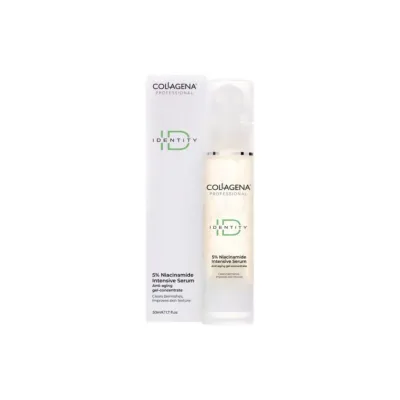
In the ONE Cosmetix range niacinamide appears across several lines - combined with resveratrol and collagen in the anti-ageing formulas, and with ingredients that help even out tone in those for uneven tone. Professional salon formulas are collected in the Collagena Professional catalog. How they fit a specific protocol is a question for training and a professional consultation, not for an article.
Common Mistakes
The first is chasing a percentage. The choice between five and ten per cent is almost never what determines the result - the base, the regularity and the rest of the routine weigh more, and above five there are simply no measurements.
The second is stopping too early. The effect on tone takes months, and most people give up after a few weeks because they saw no change in the mirror. The third is stacking: niacinamide in a toner, a serum and a cream is not three times the benefit, just three products.
And the last, most expensive one: expecting it to compensate for missing sun protection. If you are choosing products right now, the current offers by range are collected in the promotions section.
Sources
The statements in this article concern the ingredient in general, not any specific product. Titles are given in the original so you can check them. The publications the individual sections rest on:
- Hakozaki T. et al. The effect of niacinamide on reducing cutaneous pigmentation and suppression of melanosome transfer. British Journal of Dermatology, 2002.
- Greatens A. et al. Effective inhibition of melanosome transfer to keratinocytes by lectins and niacinamide is reversible. Experimental Dermatology, 2005.
- Bissett D. L. et al. Niacinamide: reversibility of reduction of facial hyperpigmented spots. Journal of the American Academy of Dermatology, 2004 (dose-response, 5% and 2%).
- Bissett D. L., Oblong J. E., Berge C. A. Niacinamide: a B vitamin that improves aging facial skin appearance. Dermatologic Surgery, 2005.
- Mar K. et al. Topical niacinamide for hyperpigmentation: a systematic review. Journal of Cutaneous Medicine and Surgery.
- Tanno O. et al. Nicotinamide increases biosynthesis of ceramides as well as other stratum corneum lipids to improve the epidermal permeability barrier. British Journal of Dermatology, 2000.
- Draelos Z. D., Ertel K., Berge C. Niacinamide-containing facial moisturizer improves skin barrier and benefits subjects with rosacea. Cutis, 2005.
- Draelos Z. D., Matsubara A., Smiles K. The effect of 2% niacinamide on facial sebum production. Journal of Cosmetic and Laser Therapy, 2006.
- Kaewsanit T., Chakkavittumrong P., Waranuch N. Clinical comparison of topical 2.5% benzoyl peroxide plus 5% niacinamide to 2.5% benzoyl peroxide alone in mild to moderate acne vulgaris. Journal of Clinical and Aesthetic Dermatology, 2021.
- Roh M. et al. Sebum output as a factor contributing to the size of facial pores. British Journal of Dermatology, 2006.
- Chiu P. C. et al. The clinical anti-aging effects of topical kinetin and niacinamide in Asians. Journal of Cosmetic Dermatology, 2007.
- Tan C. L. et al. Nicotinamide metabolism modulates the proliferation/differentiation balance and senescence of human primary keratinocytes. Journal of Investigative Dermatology.
- Sjöberg T. et al. Effect of pH on niacinamide skin permeation. Scientific Reports, 2026.
- Finholt P., Higuchi T. Rate studies on the hydrolysis of niacinamide. Journal of Pharmaceutical Sciences, 1962.
- Guttman D. E., Brooke D. Solution phase interaction of nicotinamide with ascorbic acid. Journal of Pharmaceutical Sciences, 1963.
- Ahmad I. et al. Photochemical interaction of ascorbic acid and nicotinamide in aqueous solution: a kinetic study. Journal of Photochemistry and Photobiology B, 2018.
- Park J., Halliday G. M., Surjana D., Damian D. L. Nicotinamide prevents ultraviolet radiation-induced cellular energy loss. Photochemistry and Photobiology, 2010.
- Maciejewski-Lenoir D. et al. Langerhans cells release prostaglandin D2 in response to nicotinic acid. Journal of Investigative Dermatology, 2006.
- Cosmetic Ingredient Review. Safety assessment of niacinamide and nicotinic acid.
This content is for educational purposes and does not replace professional advice. The studies referenced concern the ingredient rather than any specific product, and are not a claim about the efficacy of any ONE Cosmetix product. For persistent or severe skin concerns, consult a dermatologist.