What the research shows, and where it stops
Lavender and sleep have been studied. A 2026 meta-analysis pooled 11 randomised controlled trials with 628 adult participants and reported a statistically significant effect on sleep quality. A separate review examined 20 randomised trials, of which 14 showed a positive result. So far it sounds like confirmation.
The authors own caveats
The interesting part is in the authors’ own caveats. The conclusion that lavender improves sleep is constrained by the number and quality of the included trials and needs verification in higher-quality research. That is not formal modesty; it describes two concrete holes.
- The composition of the oils used is almost never characterised. Nobody knows exactly what was tested, and as you will see below, two oils labelled “lavender” can differ substantially in composition.
- The placebo effect cannot be separated from the effect of the oil itself. Scent is perceptible: a participant knows whether the room smells of something, which makes blinding close to impossible.
The honest reading: there is a signal, not evidence that would justify a promise. So this article does not claim that essential oil puts you to sleep, and aromatherapy is not treatment. A persistent sleep problem belongs with a doctor, not on the essential-oil shelf. Everything else here is about using scent sensibly, if you enjoy it.
Why lavender is not one thing
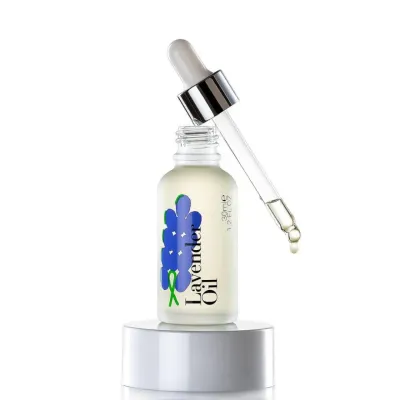
Lavender oil is produced by steam distillation of Lavandula angustifolia flowers. The two compounds that define its character are linalool and linalyl acetate. Their share, however, is not a constant.
What the analyses show
Published gas-chromatography analyses report linalool anywhere between roughly 16 and 50 per cent, and linalyl acetate between roughly 14 and 42 per cent, depending on origin, cultivar and harvest. That is a very wide range: two oils with the same label can have nearly inverted proportions. Your nose registers the difference, and it is why one lavender oil suits you and another does not.
Two things follow. First, “lavender oil” on a label does not unambiguously describe the contents, which is why origin and batch matter. Second, it explains why trials that do not characterise their oil are hard to compare with one another: they may have tested rather different substances under one name.
Top, heart and base notes: this is chemistry, not poetry
The division into notes sounds like a perfumer’s convention, but there is a measurable quantity behind it: volatility, how readily a molecule passes from liquid to vapour. Volatility in turn depends on the mass of the molecule.
- Top notes are light. Citrus monoterpenes such as limonene sit around 136 to 154 g/mol with high vapour pressure and evaporate first: you notice them immediately and they are gone within minutes to a couple of hours.
- Base notes are heavy, typically 250 to 400 g/mol with vapour pressure below 0.2 Pa. A heavier molecule moves more slowly and lingers longest.
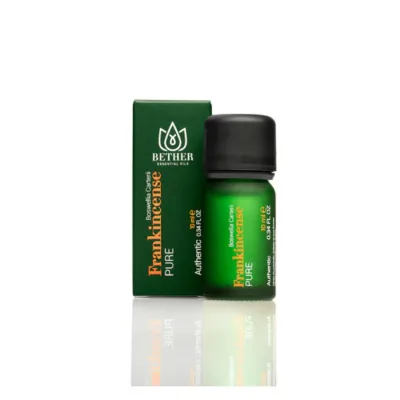
The difference between a monoterpene and a sesquiterpene sits exactly here. Monoterpenes are built from two isoprene units (C10H16), sesquiterpenes from three (C15H24). Three units mean greater mass, a higher boiling point and slower evaporation. That is why frankincense, which carries a meaningful share of sesquiterpenes, arrives later than lavender and holds the composition together instead of flying off first.
Why citrus fades first
The same logic explains why citrus and mint oils are not the first choice at 10pm: they are top notes, they evaporate fast and they are gone exactly when the ritual is only beginning. Evenings are better served by soft herbal and warm resinous aromas, which stay.
The full list of available oils, carrier oils and roll-ons is on the essential oils page.
The diffuser: the nose adapts within minutes
Olfactory adaptation is a well-described phenomenon: receptors reduce their response to a constant, unchanging aroma within seconds to minutes. It is the same mechanism that stops you smelling your own home while a visitor notices it at the door.
The practical conclusion for the diffuser follows. If the oil evaporates all night, nobody perceives the aroma: you are asleep, and even awake, your nose stopped reporting it long before. All that continues is the evaporation. The result is spent oil and saturated air in a closed bedroom, not deeper sleep.
- Start the diffuser about 30 minutes before bed: enough for the aroma to fill the room.
- For a bedroom, 2 to 3 drops is enough. More drops do not register as a stronger aroma, because adaptation has already set in.
- Switch it off as you get into bed.
If you do not own a diffuser, two drops on a cotton pad on the nightstand do the same job in a small bedroom.
Why oil should not go on the pillow
The advice is common and it is a bad idea for three reasons. Neat essential oil is concentrated and stays in contact with facial skin for hours, with no carrier oil to dilute it. It also stains fabric. And third, it puts the aroma centimetres from your nose, where the intensity is pointless: adaptation will set in regardless, only after an unnecessarily strong exposure.
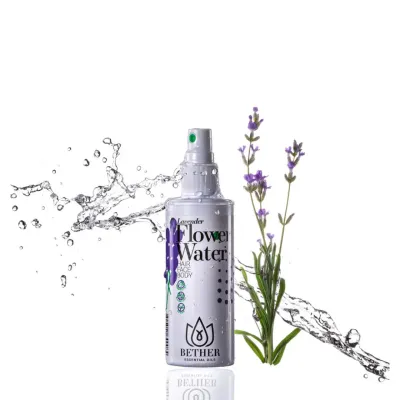
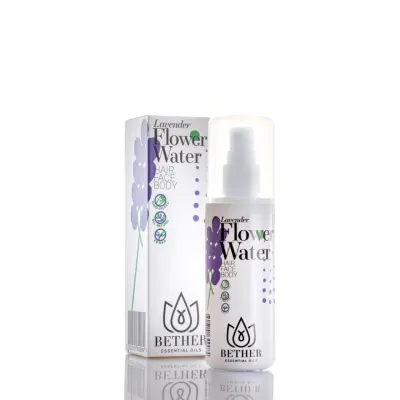
If you want scent near the bed, there are two more sensible routes. Lavender floral water is a hydrosol, a far gentler diluted product, and mists lightly over bedlinen. Or put the oil on a cotton pad and leave it beside the pillow, not on it.
On skin: diluted, or ready-made
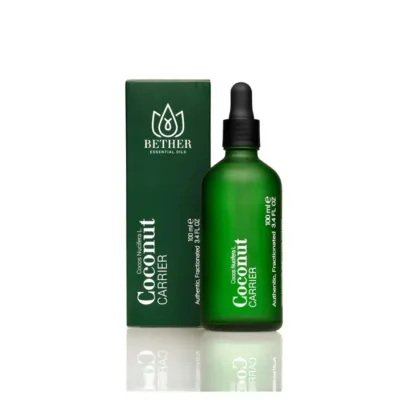
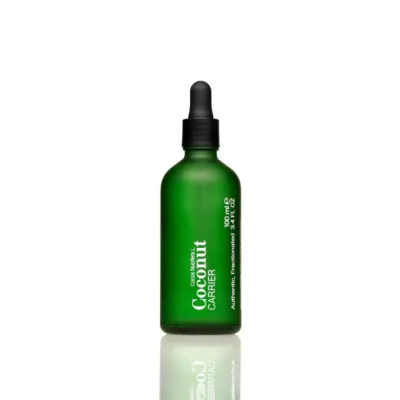
The evening ritual can include skin, but the same rule applies as everywhere else in aromatherapy: neat essential oil does not go on directly. Mix 1 to 5 drops of lavender into 20 ml of fractionated coconut oil and apply a small amount to the wrists or the soles of the feet.
The same in percentages
In percentages that is roughly 0.25% to 1.25%, because one drop is approximately 0.05 ml. The range is not arbitrary: it describes a concentration at which the oil is perceptible without irritating skin.
If measuring at 10pm feels like a chore, a roll-on solves it: the formula is pre-dosed, applies directly and lives in the nightstand drawer.
The evening ritual in three steps
- **30 minutes before bed: **2 to 3 drops of lavender in the diffuser, plus a drop of frankincense if you want the aroma to linger.
- **While the diffuser runs: **roll-on or diluted oil on the wrists.
- **Getting into bed: **switch the diffuser off. If you want scent on the linen, a light mist of floral water.
When scent will not help
It is only fair to say the opposite too. Essential oils will not compensate for the things that genuinely stand between you and a restful night.
- Afternoon coffee. Caffeine lingers for hours and no aroma switches it off.
- A screen until the last minute. The light and the content keep the brain engaged exactly when you want the opposite.
- A warm, stuffy room. Airing it before bed does more than any oil will.
Scent is a pleasant part of the evening where the basics are already in place. It is not a substitute for any of the above, and does not claim to be.
Safety
- External use only. Essential oils are not taken internally.
- On skin, diluted only. On sensitive skin, do a tolerance test first.
- Lavender oil contains linalool, which oxidises on contact with air into hydroperoxides that are stronger sensitisers than the parent compound. Keep the bottle tightly closed and respect the date on the packaging.
- Do not leave a diffuser running all night in a closed bedroom.
- Store in a dark, dry place, away from children.
- If pregnant or managing a chronic condition, consult a doctor.
- Discontinue use if irritation occurs.