What an essential oil is, as a substance
An essential oil is not a fat. It is a mixture of volatile organic compounds that the plant produces as secondary metabolites: most often mono- and sesquiterpenes, along with alcohols, esters, aldehydes and ketones. A single oil contains anywhere from a few dozen to over two hundred distinct compounds, and the ratio between them determines both the aroma and how the oil behaves on skin.
The difference from a carrier oil is physical, not marketing. A carrier oil is a triglyceride, that is, a fat: it does not evaporate and it leaves a stain on paper. An essential oil evaporates completely and leaves nothing behind. That is also the simplest test if you are unsure which one you are holding.
Everything else follows from that: concentration, dosage, oxidation and shelf life. These are not arbitrary rules but consequences of the chemistry.
The extraction method determines the composition
Steam distillation carries over only what is volatile. Non-volatile molecules in the plant material stay behind and never enter the oil. Cold pressing has no such filter: it squeezes the peel mechanically, and everything ends up in the oil, including non-volatile compounds.
Citrus is a special case
This is not a technical footnote. In citrus peel, the non-volatile fraction includes furocoumarins such as bergapten. They are photosensitising: under ultraviolet light they react in the skin and can trigger a reaction. This is why Tisserand and Young set a maximum of 2% for cold-pressed lemon oil on skin that will see sunlight, and above that level recommend avoiding ultraviolet light for 12 to 18 hours. Distilled lemon oil carries no such restriction. Same plant, different method, different risk. The restriction does not apply to every citrus oil: cold-pressed sweet orange is not considered photosensitising, while bergamot, lime, bitter orange and grapefruit are.
The reverse is also true: resins cannot be pressed. Frankincense is obtained from Boswellia carterii resin by distillation, which means the boswellic acids so often written about are not in the essential oil at all. They are non-volatile and stay in the resin. What ends up in the distillate is alpha-pinene, limonene and similar volatiles. If someone sells you frankincense essential oil on a boswellic-acid argument, they are describing a different product.
From drops to percent: where the ratio comes from
The rule “1 to 5 drops in 20 ml” looks arbitrary until you convert it into percent. One drop from a standard dropper is about 0.05 ml, so roughly 20 drops make 1 ml. From there:
- 1 drop in 20 ml = 0.05 ml in 20 ml = about 0.25% concentration.
- 5 drops in 20 ml = 0.25 ml in 20 ml = about 1.25% concentration.
So a range of 1 to 5 drops describes a concentration of roughly 0.25% to 1.25%. That is the familiar interval for leave-on cosmetics on an adult. A dropper is not a precision instrument: viscosity and temperature change drop size, so these figures are a guide, not a measurement. But the order of magnitude holds, and it explains why “I added a bit more” is not a minor difference: two extra drops in 20 ml raise the concentration by about 0.5 percentage points, which for some oils is double what was intended.
Why the ingredient list says Limonene and Linalool
If you look at the ingredient list for lemon oil you will see: Citrus Limon Peel Oil, Citral, Geraniol, Limonene, Linalool and a few more. A common mistake is to read this as “added chemicals”. They are not added. They are natural constituents of the oil itself, listed separately because European cosmetics regulation requires it.
Where the requirement comes from
Regulation 1223/2009 defines a list of fragrance compounds recognised as potential contact allergens. When such a compound is present above a threshold it must be named in the ingredient list, regardless of whether it came from the plant or from a bottle in a lab. That is why lemon oil declares five or six of them and frankincense only two: Limonene and Linalool. The difference reflects the actual chemistry.
The practical conclusion: a longer list does not mean a worse product, it means a more complex oil and a more honest label. If you have a known sensitivity to a specific compound, the ingredient list tells you exactly what you need to know.
Oxidation: why shelf life matters
Monoterpenes have double bonds and react with atmospheric oxygen. On oxidation, limonene for instance forms hydroperoxides. The important detail is that these breakdown products are stronger sensitisers than the parent compound. So an old, badly stored oil is not merely faded in aroma: it is more likely to provoke a reaction than a fresh one.
Why shelf lives differ
This is where the different shelf lives come from. Citrus oils are rich in monoterpenes, oxidise fastest, and are therefore kept cool with a shelf life of about 12 months. Resinous and heavier oils are considerably more stable. The rules about dark glass, a closed cap and a cool place are not superstition; they slow a specific chemical reaction.
Carrier oils: why their profiles differ
Carrier oils differ in fatty-acid composition, and that explains all of their behaviour.
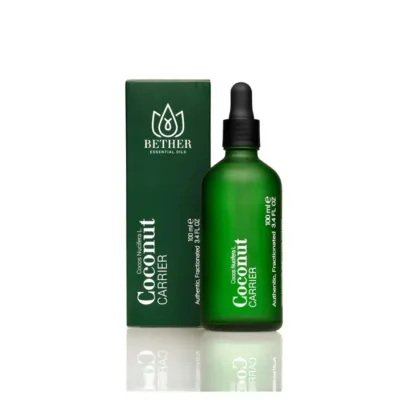
- **Fractionated coconut oil (Caprylic/Capric Triglyceride). **Fractionation removes the long-chain fatty acids and leaves the medium-chain C8 and C10. These are saturated, meaning they have no double bonds to oxidise. That is where its three properties come from: it stays liquid at room temperature, it effectively does not go rancid, and it has no aroma of its own to interfere with the essential oil.
- **Argan oil (Argania Spinosa Kernel Oil, Tocopherol). **Here the profile is the opposite: unsaturated fatty acids dominate, mainly oleic and linoleic. They give the nourishing properties, but also the double bonds that oxidise. That is why tocopherol, vitamin E, appears in the ingredient list: it is the oil’s natural antioxidant and slows the process. Argan is not “better” than coconut; it solves a different problem.
The full composition of each oil is on its product page, and the whole range is on the essential oils page.
A sensible start
For a beginner the logic is simple: one carrier oil and a few essential oils with different profiles, so you can feel the difference between a top and a base note in practice.
- Carrier: fractionated coconut if you want a clean aromatic profile and long shelf life. Argan if you also want skincare.
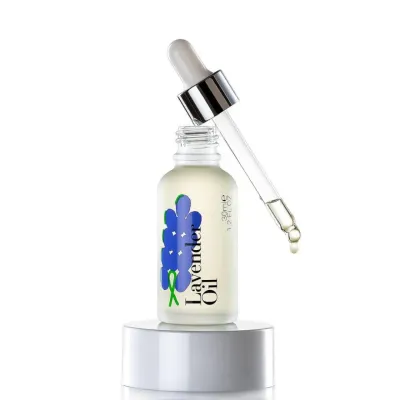
- Lavender: a herbal-floral profile, the most broadly applicable.
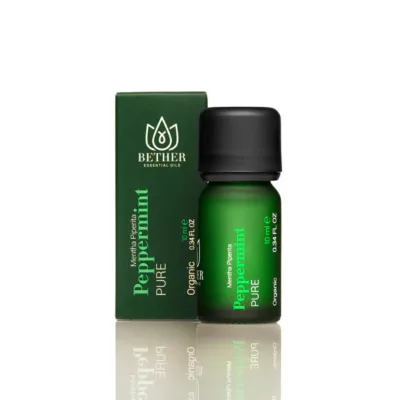
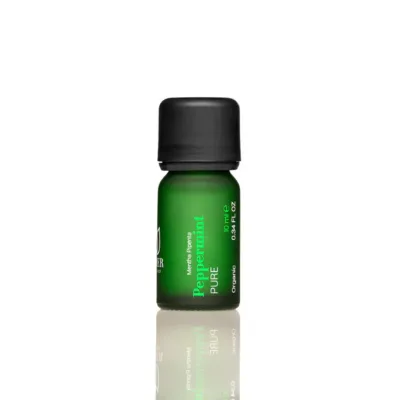
- Peppermint: high aromatic strength, start with a single drop.
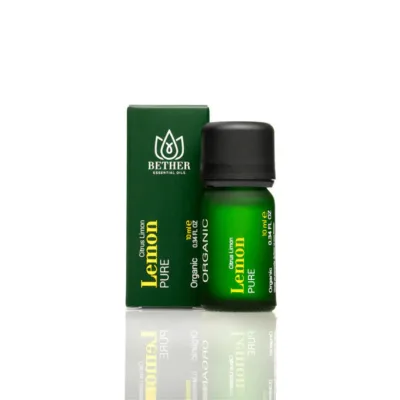
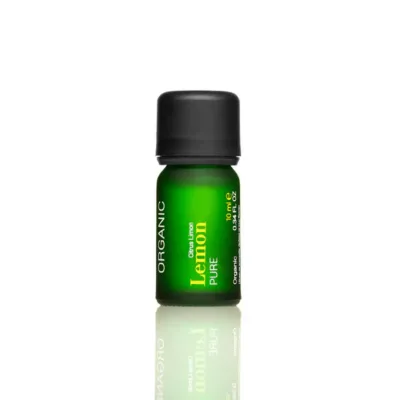
- Lemon: a fresh citrus profile, but with the sun restriction that comes from cold pressing.
- Frankincense: a base note, if you want a blend that lasts.
If you would rather not measure, a roll-on is the same chemistry in a pre-dosed form.
The limits worth knowing
- External use only. Essential oils are not taken internally.
- On skin, only diluted in a carrier or as a finished formula.
- Patch test on sensitive skin, or with a known sensitivity to a compound in the list.
- Cold-pressed lemon oil: up to 2% on skin that will see sunlight. Above that, no ultraviolet light for 12 to 18 hours. In 20 ml of carrier, 2% is about 8 drops.
- Peppermint is not recommended for babies and young children. Avoid eyes and mucous membranes.
- Dark glass, closed cap, cool and dark storage. If pregnant or managing a chronic condition, consult a doctor.
Aromatherapy is cosmetics and part of everyday comfort. It is not treatment and does not replace medical advice.