What They Are
Exosomes are extremely small vesicles enclosed in a lipid membrane that cells release outward. They measure in the tens up to around one hundred and fifty nanometres.
Inside them are proteins, lipids and various kinds of RNA. Through them cells pass signals to one another: one cell releases exosomes, another takes them up and receives information. This is a well-described biological process.
Where cosmetic ones come from
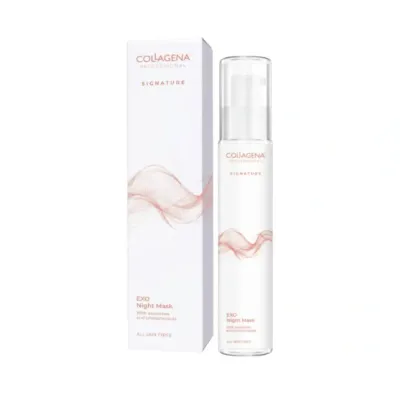
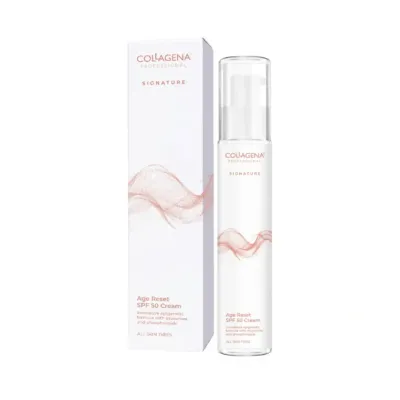
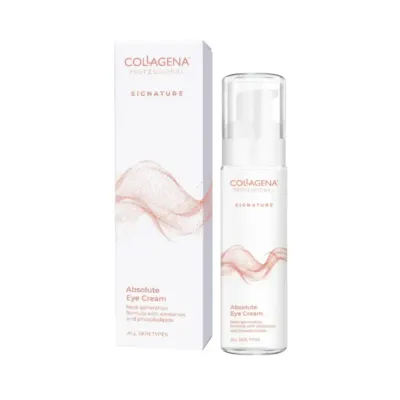
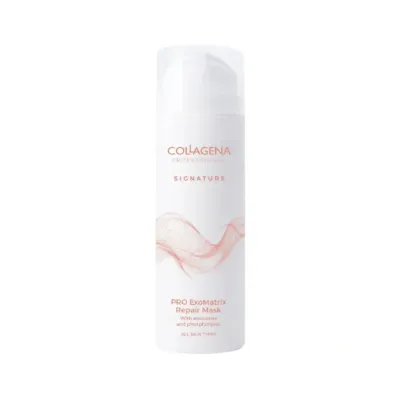
Cosmetics use plant-derived exosomes obtained from cell cultures. In Collagena Professional® products that is a Lycium barbarum callus culture. The plant origin matters: these are not human exosomes and are not the same thing.
The Difference From Liposomes
The two are often confused, because both are lipid vesicles. A liposome, however, is an artificially made carrier: an empty package you fill with a chosen ingredient.
An exosome is produced by a living cell and arrives with its own contents, which you did not choose. That is both the advantage and the difficulty: the composition is complex and harder to standardise from batch to batch.
The Central Unresolved Question: Penetration
The benefit described in advertising requires exosomes to reach fibroblasts, the cells in the dermis. To do that they must cross the skin barrier, which exists precisely to stop particles of that size.
Whether and to what degree this happens on intact skin is not convincingly established. Cell-culture research shows what exosomes do once they are already at the cells. It does not show that a cream delivers them there.
That is the distinction worth carrying with you when reading any description of an exosome product.
What the Research Shows
Most of the data comes from laboratory work on cell cultures and from research published or funded by the raw-material suppliers. Under those conditions effects on fibroblasts and on inflammatory processes are observed.
Independent human clinical trials measuring the outcome of a cosmetic product with plant exosomes are essentially absent. So specific figures for increased collagen synthesis should not travel from the test tube to the packaging.
The Regulatory Picture
The category is new and the framework around it is still settling. A cosmetic product by definition acts on the surface layers and should not be described as producing a structural change in the body.
So wording about regeneration at the cellular level or reversing ageing goes beyond the cosmetic. Honest descriptions speak of improved skin appearance, not of changed skin biology.
What to Realistically Expect
Exosome formulas usually also contain well-chosen humectants, lipids and antioxidants. Skin almost always looks better afterwards, but the credit is shared across the whole formula.
The sensible expectation is better-hydrated, calmer, more even-looking skin. Do not expect change in deep lines or laxity: those are structures cosmetics do not reach.
After a Procedure
Here the argument is stronger. After procedures that break the surface, the barrier temporarily lets more through and the penetration question stands differently.
Such use, however, is judged by the specialist performing the procedure rather than decided alone. If you are having procedures, ask them what to apply and when.
Is It Worth the Price
If your budget is limited, the answer is no. Sun protection, retinol and vitamin C have incomparably firmer evidence and cost considerably less.
If the basics are already in place and you want to add something, an exosome product is a reasonable experiment with realistic expectations. The ingredient is well tolerated and the risk is low.
How to Read the Descriptions
Ask three things. What was it tested on: cell culture or people. Who funded the research. And what exactly is promised, over what period, and measured how.
If the answers are not available, the claim is advertising rather than science. That does not make the product bad; it means you judge it by the whole formula rather than one name on the front.
In Short
Exosomes are real biology and a promising direction. As a cosmetic ingredient, though, the category is young, and the evidence lags well behind both the price and the language used to sell it.
That is a good reason for interest and a poor reason for high expectations. In a few years we will know more than we do today.
How They Are Produced
Plant cells are grown in a controlled environment that does not use the plant itself. The culture releases vesicles, which are then collected and purified by centrifugation and filtration.
The advantage is predictability and independence from the season. The difficulty is that different purification methods yield different compositions, and standardisation across manufacturers is not yet settled.
Stability Is a Practical Problem
The lipid membrane of the vesicles is sensitive to heat, light and mechanical stress. Their contents, RNA especially, degrade fairly quickly outside controlled conditions.
Formulating them into a cream that sits on a shelf for months and is opened daily is therefore a serious challenge. Opaque airtight packaging is essential rather than a preference.
What that means for you
An exosome product in a clear jar is a contradiction in itself. If a manufacturer has invested in an expensive ingredient but not in packaging to preserve it, the priorities are wrong.
Plant and Human: An Important Distinction
Much of the scientific literature on exosomes concerns human or animal cells and relates to medicine rather than cosmetics. That research is frequently cited in advertising for cosmetic products.
The transfer is not sound, though. Plant vesicles have a different composition and behave differently. If you see a study cited, check what source it was based on.
How to Use Them
On clean skin, before a richer cream, morning or evening. They need no adjustment period, do not make skin sun-sensitive and combine with other ingredients without restriction.
Store the product cool and away from light. If the manufacturer recommends refrigeration, that is not marketing but a consequence of how sensitive the ingredient is.
Who It Makes Sense For
For people who already use sun protection, moisturising and at least one proven active consistently, and are looking for something to add. The category is an addition rather than a foundation.
If you are still building a routine, the money will do more elsewhere. That is not modesty on our part but the most practical advice we can give.
Common Myths
That exosomes are stem cells. They are not: they are vesicles released by cells, not the cells themselves. That they carry genetic information which permanently changes your cells. That is not the case in cosmetic use.
And that a higher price means a higher concentration. Concentration is almost never declared, and price reflects the novelty of the category as much as what is in the bottle.
Why the Category Appeared Now
Exosomes have been studied actively in medicine for years, mainly in relation to diagnostics and drug delivery. Cosmetic interest in them follows from that scientific momentum rather than from discoveries within cosmetics.
That also explains the language around them: it is borrowed from medical literature, where the context is different. The terminology sounds convincing precisely because it comes from somewhere it means something more specific.
What Would Change the Picture
Three things: independent human trials with enough participants, clear data on how far the vesicles travel when applied to intact skin, and standardisation of composition across manufacturers.
None of the three is impossible and work is under way on each. So following the category is worthwhile even if you decide to wait for now.
How They Fit Into a Routine
As an additional serum after cleansing and before your cream. They replace neither moisturising, nor sun protection, nor a proven active. The full sequence is in our anti-ageing routine.
If you decide to try one, give the product at least three months and change nothing else meanwhile. Otherwise you will not be able to credit the result correctly.
Safety and Tolerability
Plant exosomes are well tolerated and rarely cause reactions. The formulas around them are usually gentle, because they are aimed at mature and more sensitive skin.
If your skin reacts to such a product, the cause is more often fragrance or another ingredient in the formula. As with any new product, a patch test remains the sensible precaution.
What to Ask Before Buying
What source the vesicles come from and whether it is declared. What the packaging is and whether it protects the contents. What else is in the formula, since that will do most of the visible work.
And the most practical question: would you buy this product for the rest of its formula if the word exosomes were not on the box. If the answer is yes, the purchase makes sense.