What It Is
Retinol is a form of vitamin A and belongs to the retinoid group. In skin it goes through a conversion: retinol becomes retinaldehyde, and retinaldehyde becomes retinoic acid. Retinoic acid is the form that actually does the work.
Each conversion step reduces how much reaches the target. So retinol works more slowly than prescription retinoids, but is also tolerated considerably better. That is a trade-off, not a flaw.
Retinol, retinal and retinyl palmitate
Retinaldehyde is one step closer to the active form and works faster. Retinyl palmitate is one step further away and is the weakest of the three. If retinyl palmitate is all you see on the label, expect a modest result.
What It Does in Skin
Retinol speeds up cell turnover at the surface, which over time smooths texture and evens tone. At the same time it influences processes in deeper layers connected with collagen.
Studies on topical retinol at concentrations between 0.25% and 1% report reduced depth of fine lines and improved evenness of tone after several months of use. It is one of the few cosmetic ingredients with consistent results across independent research.
And for blemishes
Faster turnover also helps congestion-prone skin, since it reduces the build-up of cells in pores. If that is your main concern, see our blemish-prone routine.
The Adjustment Period
For the first few weeks skin often looks worse rather than better: dryness, light flaking, tightness, sometimes redness. This is common and usually settles within four to six weeks.
There is a limit, though. Persistent burning, marked redness and soreness are not part of adjusting; they signal that the concentration or frequency is too high. In that case stop for a week and return more gently.
How to Start
Start with a low concentration, around 0.25%, twice a week. After a month without trouble, move to every other evening. Later you can increase either the concentration or the frequency, but not both at once.
The sandwich method
If your skin reacts strongly, apply cream, then the retinol, then cream again. This slows penetration and softens the start. Good buffers are squalane, panthenol and ceramides.
Evenings Only, and Always With Sunscreen
Retinol is degraded by light, so it is used at night. More important is the other point: it makes skin more sun-sensitive, which means sunscreen the next day is not a recommendation but a condition.
Without sun protection, retinol can leave you with more irritated skin and more pigmentation than you started with. If you are not ready to use protection daily, it is better to postpone introducing it.
What Not to Combine It With
Not on the same evening as AHA acids, salicylic acid or benzoyl peroxide. Alternate across evenings. Niacinamide, hyaluronic acid and ceramides combine comfortably and even help.
Who Should Not Use It
Retinoids are not recommended during pregnancy or breastfeeding. If you are pregnant, planning a pregnancy or nursing, set retinol aside and discuss alternatives with your doctor.
With very reactive skin or an active skin condition, that judgement belongs to a dermatologist. A gentler alternative, with support from one small study, is bakuchiol.
When You Will See a Result
Texture improves first, usually after two months. Tone evens out around the third or fourth month. A change in fine lines takes longest: between six months and a year of regular use.
Retinol is not an ingredient you use in courses. The result holds while you use it and gradually fades if you stop. So more important than concentration is whether you can keep using it consistently for years.
How to Choose a Product
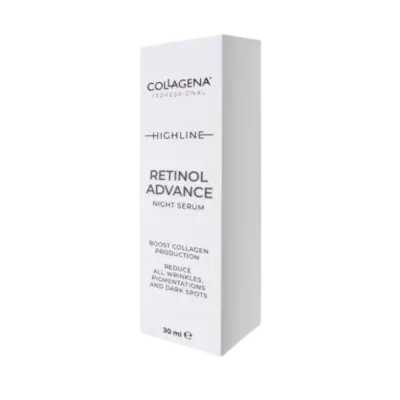
Packaging matters almost as much as concentration. Retinol is degraded by light and air, so a jar is a poor choice. Look for an opaque tube or an airless pump.
If the concentration is not stated, assume it is low. That is not necessarily bad to begin with, but it makes it harder to judge when to step up. Formulas with added soothing and barrier ingredients are usually easier to tolerate.