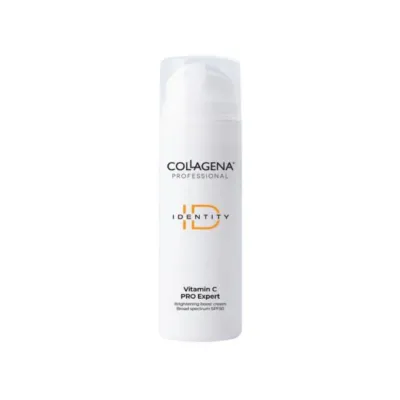
What vitamin C does in skin
Vitamin C does three different things, which explains why it is so valued. First, it is an antioxidant: it neutralises the free radicals formed by sun and pollution before they damage structures in the skin.
Second, it takes part in collagen production. The enzymes that build collagen need vitamin C to function, and without it the process stalls whatever else is in place.
Third, it influences pigment production, which over time makes tone more even and marks less noticeable. It is this combination of three roles that makes the ingredient so widely recommended.
The forms, and which to choose
L-ascorbic acid is the pure form of vitamin C. It is the best studied and most effective, but also the least stable: it degrades quickly on contact with light and air.
Derivative forms such as magnesium ascorbyl phosphate, sodium ascorbyl phosphate and ascorbyl glucoside are considerably more stable and gentler. The trade-off is that skin must convert them first, which reduces how much reaches the target.
Which one for whom
If your skin is robust and you want the strongest effect, choose L-ascorbic acid. If your skin is sensitive or you are just starting out, a derivative is the more sensible beginning: slower, but rarely irritating.
Concentration and pH
For L-ascorbic acid the working range is between ten and twenty percent. Above twenty the benefit does not increase proportionally, while the chance of redness and stinging rises noticeably.
pH matters no less: the pure form needs an acidic environment, usually below 3.5, in order to penetrate. So a product with a high concentration but a neutral pH will do little despite the number on the box.
If you are just starting, begin with ten percent or a gentler form and build up gradually. Going straight to twenty percent pure acid often ends in irritated skin and an abandoned bottle.
Packaging is part of the product
Vitamin C oxidises on contact with air and light. Oxidised vitamin C not only stops working but can also tint the skin temporarily. Packaging is therefore not a cosmetic detail but a functional part of the formula.
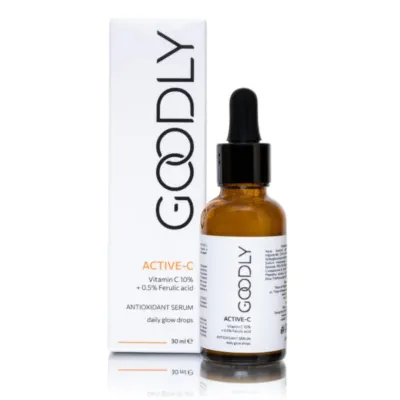
Look for opaque or dark airless pump packaging. Avoid clear jars and dropper bottles, where every opening lets air in.
How to tell it has spoiled
The serum darkens: from clear or pale yellow it turns amber, orange or brown. A faint metallic smell appears as well. If you see those changes, the ingredient no longer works and the product should be replaced.
When to apply it
In the morning, on clean skin, before your cream and before sunscreen. The logic is simple: an antioxidant makes most sense before the day during which skin will meet sun and pollution.
Vitamin C does not replace sunscreen and should not be relied on for protection. The two work differently and complement each other. If you skip protection, much of the point of the serum is lost.
What it pairs with
With vitamin E and ferulic acid, which stabilise it and broaden the protection. The combination of the three is among the best studied in skincare.
The myth that niacinamide and vitamin C cancel each other out comes from old laboratory observations at high temperature and does not reflect real use. The two combine comfortably.
With retinol and with acids it is easier to separate them: vitamin C in the morning, the rest at night. Not because of a conflict, but because both are acidic and applied together they more often irritate.
Common mistakes
The first is storing it somewhere warm and bright, on a shelf by a window or in the bathroom. The second is starting at the highest concentration, which nearly always leads to irritation and to giving up on the product.
The third is use without sunscreen, which loses much of the point. The fourth is impatience: vitamin C does not deliver in a week, and switching product every month never lets any of them show what it can do.
For whom, and from what age
Vitamin C suits practically anyone exposed to sun, which is to say everyone. The benefit is clearest with uneven tone, with post-blemish marks and with skin showing signs of sun exposure.
There is no age at which you must start. It is more logical to begin from need: if your tone is even and you have no concerns, sunscreen and consistent moisturising matter more. If marks are already there, vitamin C is among the best justified choices.
When you will see a result
Skin looks fresher and brighter fairly quickly, often within two to four weeks. Evening out tone and fading marks takes longer: usually between two and three months of consistent morning use.
The collagen-related effect on skin firmness is the slowest and is measured in months. Vitamin C is a long-term ingredient, not a quick fix before a particular occasion.
Serum, cream or mask
A serum is the format in which vitamin C works best, because it allows a higher concentration and quicker contact with the skin. A cream with vitamin C is the gentler option and is convenient if a serum feels too active.
Masks give a short-lived brightening effect for a particular occasion, but they do not replace daily use. With this ingredient the result comes from consistency rather than from occasional intensive applications.
Vitamin C and marks on the skin
Vitamin C is among the sensible choices for uneven tone and post-blemish marks, because it influences pigment production. Its action is gradual, though, and evening-out rather than lightening.
Without daily sun protection the result is lost, because the sun keeps driving the very process you are trying to limit. If marks are deep or appear quickly, working out the cause is a job for a dermatologist.
How to read the label
Look for ascorbic acid for the pure form, or the names of the derivatives such as magnesium ascorbyl phosphate. Position on the list hints at the amount: an ingredient at the very end is largely a token presence.
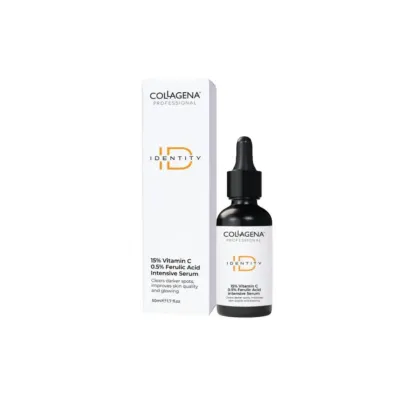
Ferulic acid and tocopherol in the formula are a good sign, since they stabilise vitamin C. A declared percentage is only useful if the manufacturer also states which form it refers to.
Is a more expensive product worth it
Not necessarily. Vitamin C is not an expensive raw material, and a higher price often reflects the rest of the formula or the brand rather than the amount of active ingredient.
Form, concentration and packaging are more reliable guides than price. An affordable serum in opaque airless packaging usually performs better than an expensive one in a clear dropper bottle.
Vitamin C and sensitive skin
Sensitive skin is not a reason to give up on vitamin C, but it is a reason to choose a gentler form. The derivatives are tolerated considerably better than the pure acid and rarely cause stinging.
Start every other day and watch how your skin responds over the first two weeks. Slight warmth immediately after application is normal; persistent redness and stinging are not, and mean the form or concentration does not suit you.
What vitamin C does not do
It does not replace sunscreen, does not smooth deep lines and does not clear marks within weeks. Nor is it an answer to active inflammation, where the judgement belongs to a dermatologist.
Its strength is consistency: daily antioxidant protection, support for collagen and a gradual evening of tone. That is the real benefit, and it is reason enough for the ingredient to earn its place in a routine.
How to fit it into a routine
The order is the usual one: cleanse, vitamin C on slightly damp skin, then a moisturiser and finally sunscreen. Wait about a minute between the serum and the cream so it is not diluted too much.
There is no need to add several antioxidant products at once. One well-chosen serum used every morning gives more than three rotated without a system.