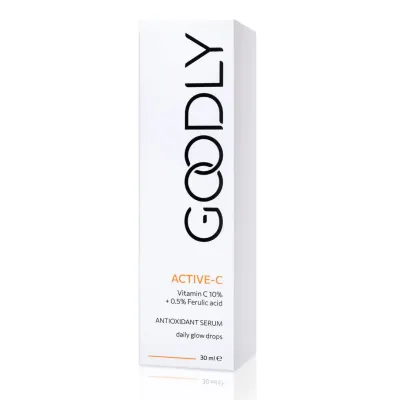
What is Vitamin C?
Vitamin C (L-ascorbic acid) is a water-soluble antioxidant that plays a key role in collagen synthesis, protection against oxidative stress, and skin tone evening. Humans cannot synthesize vitamin C, so topical application is necessary for skin health improvement. Scientific studies show that vitamin C effectively neutralizes free radicals caused by UV radiation, pollution, and other environmental factors.
According to a meta-analysis of 31 clinical trials, vitamin C at around 10% concentration significantly prevents UV-induced pigmentation in various skin phototypes. Topical application of vitamin C improves skin texture, reduces signs of photoaging, and provides antioxidant protection.
Types of Vitamin C in Cosmetics
Not all forms of vitamin C are equal. They differ in stability, skin penetration, pH, and irritation potential:
1. L-Ascorbic Acid (Pure Vitamin C)
L-ascorbic acid is the most studied and most potent form of vitamin C. It is water-soluble and requires low pH (around 3.0-3.5) for optimal efficacy. According to clinical studies, concentrations between 10-20% are optimal for visible results. Despite high efficacy, L-ascorbic acid is unstable and oxidizes quickly when exposed to light, air, and heat.
2. Magnesium Ascorbyl Phosphate (MAP)
MAP is a more stable form of vitamin C that converts to active L-ascorbic acid in the skin. It is gentler and more suitable for sensitive skin, as it has higher pH and causes less irritation. Scientific studies show that MAP provides longer-lasting stability in cosmetic formulas.
3. Sodium Ascorbyl Phosphate (SAP)
SAP is another stable derivative of vitamin C that is particularly effective for acne-prone skin. It is water-soluble and more stable than pure L-ascorbic acid. Clinical data shows that SAP reduces sebum production and improves skin texture in problematic skin.
4. Ascorbyl Glucoside
Ascorbyl glucoside is a water-soluble derivative that converts to active form through enzymatic activity in the skin. It is very stable and suitable for all skin types, including oily and combination. Studies show that ascorbyl glucoside provides gradual release of vitamin C, reducing the risk of irritation.
5. Ester Forms (Ascorbyl Palmitate, Tetrahexyldecyl Ascorbate)
Ester forms of vitamin C are fat-soluble and more stable than water-soluble forms. They are suitable for dry and mature skin, as they provide better penetration into the skin’s lipid layer. Although more stable, they may have a slower effect compared to L-ascorbic acid.
How, When and Why to Use Vitamin C
When to Use Vitamin C?
The best time to apply vitamin C is in the morning, after cleansing and before moisturizer. Scientific recommendations show that morning application provides protection from daily oxidative stress caused by UV rays, pollution, and other environmental factors. Vitamin C should always be used with sunscreen SPF 30+ for maximum protection.
How to Use Vitamin C?
The order of application is critical: 1) Cleansing, 2) Toner (low pH), 3) Vitamin C serum (thinnest actives first), 4) Moisturizer, 5) Sunscreen (morning). For beginners, starting with 5-10% concentration and gradually increasing to 15-20% for L-ascorbic acid is recommended. According to expert recommendations, concentrations above 20% rarely provide additional benefits and may increase irritation risk.
Why Use Vitamin C?
Vitamin C provides multiple proven benefits: antioxidant protection from free radicals, stimulation of collagen synthesis, skin tone evening, and pigmentation reduction. Clinical studies show that the combination of vitamin C + vitamin E + ferulic acid significantly reduces UV-induced markers such as sunburn and DNA damage.
Effects and Benefits of Vitamin C
1. Antioxidant Protection
Vitamin C is a powerful antioxidant that neutralizes free radicals caused by UV radiation, pollution, and stress. This prevents premature aging and DNA damage. Studies show that vitamin C reduces oxidative stress in the skin and improves its ability to recover from damage.
2. Collagen Stimulation
Vitamin C is necessary for collagen synthesis by activating enzymes that hydroxylate proline and lysine in procollagen. This improves skin elasticity, reduces fine lines, and improves texture. According to a systematic review, long-term use of vitamin C leads to smoother texture and reduction of photoaging signs.
3. Tone Evening and Pigmentation Reduction
Vitamin C inhibits tyrosinase - an enzyme necessary for melanin production. This reduces pigment production and lightens dark spots. A meta-analysis of 31 clinical trials shows that vitamin C significantly prevents UV-induced pigmentation and is effective in treating melasma.
4. Photoaging Protection
The combination of vitamin C + vitamin E + ferulic acid provides synergistic protection from UV damage. A clinical study shows that this combination significantly reduces UV-induced markers such as sunburn, thymine dimers, and p53 protein in human skin.
Who Shouldn’t Use Vitamin C?
Sensitive and Reactive Skin
High concentrations of pure L-ascorbic acid can cause irritation, stinging, or redness in sensitive skin, rosacea, or eczema. Recommendations include starting with low concentration or using gentler derivatives such as MAP or SAP.
Combining with Other Active Ingredients
Vitamin C should not be combined with benzoyl peroxide, as it can oxidize vitamin C and reduce its efficacy. Experts recommend separating routines - vitamin C in the morning, and strong exfoliants or retinoids in the evening. Combination with niacinamide is safe in modern formulas, but if irritation occurs, it’s better to use them at different times of day.
Pregnancy and Breastfeeding
Topical application of vitamin C is considered safe during pregnancy and breastfeeding. Studies show that vitamin C is a safer alternative to retinol during pregnancy. However, it is always recommended to consult with a healthcare professional before using active cosmetic products.
Compromised Skin Barrier
With compromised skin barrier or open wounds, vitamin C can cause stinging and irritation. It is recommended to wait for full skin recovery before starting vitamin C treatment.
Best Practices and Tips
• Patch Test: Always test the product on a small area (jaw or inner arm) for 24-48 hours before full application.
• Gradual Introduction: Start with application every other day for the first 1-2 weeks, then move to daily application if the skin tolerates it well.
• Monitor Oxidation: If the serum turns dark or has an unusual smell, it’s time to replace. Use opaque, dark glass bottles or airtight pumps to protect from light and air.
• Don’t Skip Sunscreen: Vitamin C helps but does not replace UV protection. Always use broad-spectrum sunscreen with SPF 30+ when using vitamin C in morning routine.
• Expectations: Visible reduction of hyperpigmentation usually takes 4-12 weeks of consistent use. Anti-aging effects (wrinkle smoothing, firmness) accumulate over months.