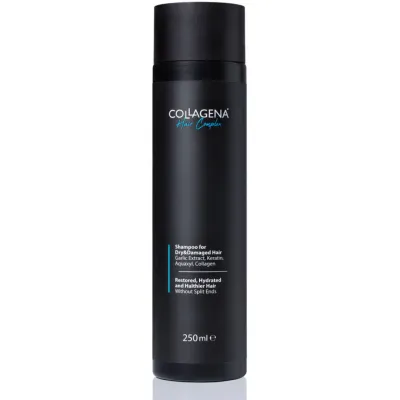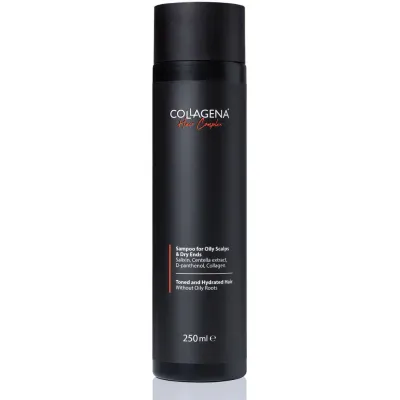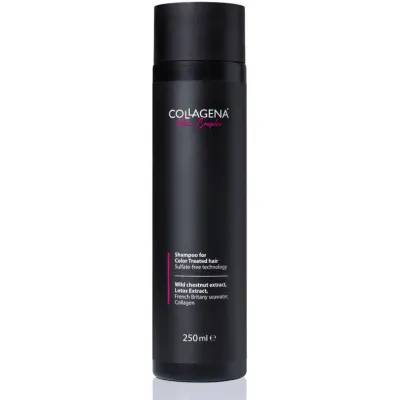
What a shampoo actually does
The main job of a shampoo is simple. Surfactants have two ends: one loves water, the other loves oils. When you apply them with water, they wrap around particles of sebum, sweat and dirt and rinse them away.
The complex part is the balance. Aggressive surfactants wash away everything, including the natural lipids of the hair. The result: a clean scalp and dry hair. Milder surfactants preserve the lipids, but may not clean enough on an oily scalp or with heavy styling.
A good shampoo finds the balance for a specific scalp and hair type. No single shampoo can work perfectly for everyone. The choice depends on three things: scalp activity, the condition of the hair and how often you wash.
Surfactant classes: from aggressive to gentle
Cosmetics use four main classes of surfactant.
- Sulphates (anionic): SLS (sodium lauryl sulphate) and SLES (sodium laureth sulphate). Very good cleansers, cheap, and produce rich lather. SLS is more aggressive; SLES is slightly gentler. They dry the hair with frequent use and can irritate a sensitive scalp.
- Isethionates: SCI (sodium cocoyl isethionate) and similar. Gentle, good lather, without drying. More expensive to produce.
- Amino acid surfactants: sodium cocoyl glutamate, sodium lauroyl sarcosinate. The gentlest, suitable for a sensitive scalp and coloured hair. The lather is weaker.
- Amphoteric: cocamidopropyl betaine, lauryl hydroxysultaine. Almost always combined with other surfactants; they soften the formula and add lather.
The formula is usually a blend. Sulphate-free means SLS and SLES are absent, but the product may contain other surfactants. Read the ingredient list: the first three to five positions show the main cleansing system.
pH: why it matters and how it affects the hair
Hair has a natural pH of around 3.67. When a high-pH shampoo (above 6) passes over the hair, the cuticle opens. An open cuticle means a rough surface, less shine and easier tangling.
A shampoo with a pH close to the hair (4.5 to 5.5) keeps the cuticle closed. The result: smoother hair, better colour retention and less lasting damage with frequent washing.
Most quality shampoos have a pH of 5 to 6. Soap-based shampoos (such as castile soap) have a pH of 9 to 10 and are not suitable for regular use. If the label does not state the pH, the ingredient list gives a hint. Citric acid, lactic acid or sodium citrate at the end of the list usually means the formula is balanced towards a lower pH.
Choosing by scalp and hair
The two factors work together, but not always in the same direction. The scalp and the hair can have different needs.
Oily scalp and dry hair (common with long hair): choose a moderately effective shampoo (SLES or isethionate), apply only to the scalp, and let the lather run down the lengths without rubbing. Use conditioner only on the lengths, not on the scalp.
Dry scalp and dry hair: an amino acid or isethionate shampoo with humectants (glycerine, panthenol). Do not wash every day. A rich conditioner after every wash.
Normal scalp and coloured hair: a colour-protecting shampoo (UV filters, low pH, sulphate-free). SLES can fade colour faster; amino acid shampoos preserve it longer.
Sensitive scalp (itching, redness, dandruff): avoid fragrances, essential oils and the preservative methylisothiazolinone (MI). For seborrhoeic dermatitis with dandruff: a shampoo with 1% zinc pyrithione or 1 to 2% ketoconazole, twice a week.
Damaged hair (chemical treatment, heat): see the page on damaged hair for specific formulas with proteins and peptides.
How often to wash your hair
There is no universal rule. The frequency depends on sebaceous gland activity, hair type and lifestyle.
- Oily scalp, straight hair: 3 to 4 times a week. Daily washing can increase sebum production.
- Normal scalp: 2 to 3 times a week is usually enough.
- Dry scalp or dry climate: 1 to 2 times a week, with a gentle shampoo.
- Curly or afro texture: once a week or less. Sebum struggles to spread along the curved structure; over-frequent washing increases dryness.
- After exercise: water alone rinses away most of the salt and sweat. You do not need shampoo every time.
The myth that you must wash your hair every day comes from 1980s advertising. For a healthy scalp and hair, washing less often with the right shampoo gives better results.
Correct application technique
Technique makes a bigger difference than the brand.
- Wet the hair with warm (not hot) water for at least 1 minute. This already rinses away 60 to 70% of surface dirt.
- Apply a hazelnut-sized amount of shampoo to your palm. Rub it between your hands before applying it to the scalp.
- Massage the scalp with your fingertips, not your nails. The lather spreads down the lengths on its own.
- Do not rub the hair along its length; it is not as dirty as the scalp. The lather running down during rinsing is enough to clean it.
- Rinse with lukewarm or cool water. Cool water closes the cuticle and adds shine.
- For heavily styled or very oily hair: a second wash after a short pause, with half the amount of shampoo.
Important: lather is not a measure of cleaning. Amino acid shampoos produce less lather and clean excellently.
Common myths and mistakes
Rotating shampoos helps the hair: unproven. The scalp does not get used to one shampoo. If it works, do not change it.
Sulphate-free always means better: it depends. For an oily scalp and heavy styling, SLES cleans effectively. For coloured hair or a sensitive scalp, sulphate-free formulas are more suitable.
Natural ingredients make a shampoo gentler: not necessarily. Essential oils (lavender, citrus) are common allergens. Many natural shampoos contain cocamidopropyl betaine, which can irritate sensitive skin.
Expensive shampoo works better: the price reflects marketing and packaging more than the formula. Several pharmacy brands have very good formulas at a low price.
A silicone-free shampoo is essential: silicones (dimethicone, cyclopentasiloxane) give shine and protection. Water-soluble silicones rinse out easily. Only with very fine hair or heavy build-up is it worth avoiding them.
Dandruff means a dirty scalp: the opposite. Dandruff (seborrhoeic dermatitis) often worsens with aggressive, frequent washing. Consult a dermatologist for persistent dandruff before treating it yourself.
When to consult a dermatologist
Shampoo solves 80% of scalp problems. The other 20% require medical help.
- Persistent dandruff (seborrhoeic dermatitis, psoriasis, tinea capitis): not every anti-dandruff shampoo works for every type. The diagnosis matters.
- Hair loss over 100 strands a day for more than 3 months: this is not a cosmetic problem. It requires dermatological assessment (telogen effluvium, androgenetic hair loss, alopecia).
- Severe itching with no visible dandruff: possible scalp allergy, folliculitis or fungal infection.
- Red, inflamed patches on the scalp: these are not normal. They require examination.
- A sudden change in hair texture: this can signal a hormonal or nutritional cause.
For general questions about routine and styling, see the hair care page or the scalp problems page.