What Liquid Crystal Means
The liquid crystal state is a physical state between liquid and crystal: the substance flows, but its molecules are ordered rather than random. That is a real physical phenomenon, not a marketing invention.
The important clarification is this: the name describes the state of the product in the bottle, not some special mechanism inside the hair. On hair these products work like any other smoothing serum.
Why it still matters
The ordered structure makes the product feel lighter and lets it spread evenly in very small amounts. That is a genuine practical advantage over a plain oil, which weighs hair down easily.
What They Do on Hair
They coat the surface and smooth a lifted cuticle. A smooth surface reflects light evenly, which gives shine, and reduces friction between strands, which makes combing easier.
Less friction also means less new breakage during combing and styling. That is their real value, and it is reason enough to use them.
The effect is superficial and washes out. It renews with each application rather than accumulating in the structure of the hair.
What They Do Not Do
They do not rebuild the strand or fill structural damage at depth. Hair is dead tissue, and these products work on its surface.
Nor do they stop splitting. Once split, a strand does not rejoin. The product visually binds the ends and reduces friction, which slows the worsening, but trimming remains the only solution.
Silicone and Plant-Based
Silicone formulas give the most pronounced smoothness and shine and last longer. The drawback is that they build up if you wash with a very mild shampoo, and over time hair starts to look dull.
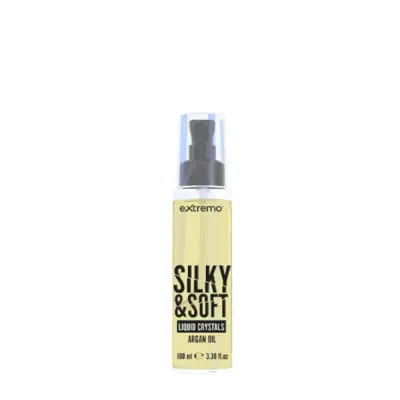
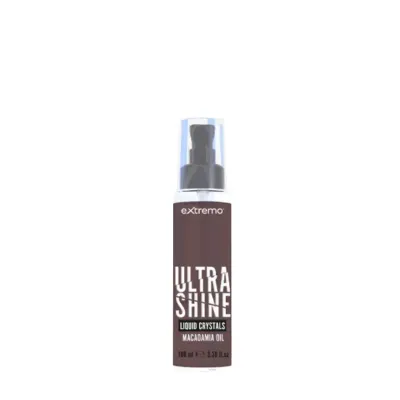
Plant-based formulas built on oils such as argan and macadamia rinse out more easily and feel lighter. Their effect is more modest and needs renewing more often.
Neither is better in principle. Silicones are not harmful to hair, and plant oils are not automatically safer. The choice depends on how much smoothness you want and how often you wash.
How Much, and Where
One or two drops for medium-length hair, warmed between the palms and worked through the lengths and ends. Never at the roots: there it only weighs hair down and speeds up greasiness.
Using too much is the most common mistake. If hair looks greasy afterwards, use half as much next time and work it into the ends first, then upward with what is left on your palms.
On Damp or Dry Hair
On damp hair the product distributes more evenly and helps with combing when hair is at its most fragile. That is when it does the most good.
On dry hair it is used to tame flyaways and add shine at the end. Here the amount must be smaller still, because dry hair does not dilute the product.
For Which Hair Type
The benefit is clearest on dry, curly, lightened and chemically processed hair, that is, where the cuticle is lifted and the surface is rough.
On fine, grease-prone hair proceed carefully: start with one drop on the ends only. On very straight, healthy hair the benefit is mostly cosmetic, which is a perfectly valid reason too.
Build-Up and How to Handle It
The signs are familiar: hair looks dull despite the product, feels heavy and stops responding to masks and conditioners. That is build-up rather than a decline in condition.
A clarifying shampoo every few weeks handles it. More often than that dries hair out needlessly. How to choose your everyday shampoo is covered in a separate guide.
How to Read the Promises
Claims about rebuilding hair from within, deep reconstruction or penetrating to the cortex go beyond what a smoothing product does. The same applies to specific numbers for how many washes the effect survives.
Honest wording sounds more modest: a smoother surface, easier combing, less static, more shine. That is the real list, and it is enough.
What to Expect
The difference shows immediately: shinier hair that combs more easily and frizzes less. That is an instant effect rather than a result that builds over weeks.
The long-term benefit is indirect: less friction means less new breakage. The rest depends on heat, chemistry and trims, covered in our hair routine.
How to Read the Ingredients
Ingredients ending in cone, conol and xane are silicones: dimethicone, cyclopentasiloxane, amodimethicone. Their position on the list hints at how pronounced the smoothing will be.
Plant formulas list oils by their botanical name, such as argania spinosa kernel oil. If the oil sits near the end of the list, its presence is more for the label than for your hair.
Liquid Crystals and Heat Protection
The smoothing layer does give some protection by slowing abrupt moisture loss. That is not the same, though, as a product formulated specifically for heat protection.
If you use straighteners or tongs regularly, apply heat protection first and the liquid crystals afterwards. If a product claims both functions, check that heat protection is stated explicitly rather than implied.
Static in Winter
Dry winter air and hats create static that makes strands repel each other. Smoothing products are particularly useful here, because that is exactly what they reduce.
One drop rubbed between the palms and smoothed over the surface is usually enough. It is also the quickest way to fix hair after taking off a hat without wetting it.
Common Mistakes
Too much, applying at the roots, and using it on already greasy hair. All three give the same result: hair that looks unwashed.
The fourth is expecting the product to do a mask job. Liquid crystals smooth but do not hydrate: dry hair needs both, in that order.
In Short
Liquid crystals are a good smoothing product with a genuine practical advantage: they work in very small amounts and feel light. The name describes their physical state, not a special mechanism inside the hair.
Used sparingly, they make hair visibly better and easier to manage. That is enough, and it needs no exaggerated claims.
Liquid Crystals, Serum and Oil
The differences between the three are mostly texture and how heavy they feel. Oil is the richest and suits very dry, thick hair. A serum is usually silicone-based and gives the fastest smoothness.
A liquid crystal formula sits between them: lighter than oil, more spreadable than a heavy serum. If you have given up on oils because of the weight, this is the format worth trying.
How to Combine Them With the Rest of Your Care
The order is simple: shampoo, conditioner or mask, then liquid crystals on towel-dried hair. The smoothing product comes after the hydrating ones, because it seals rather than hydrates. How the whole routine fits together is in our hair care guide.
They do not replace protein care. If your hair breaks and stretches, it needs a product with hydrolysed keratin, with liquid crystals afterwards to smooth the surface.
Storage and Shelf Life
Formulas built on plant oils oxidise over time, particularly in light and warmth. If a product changes smell or darkens noticeably, the ingredients have degraded and it is better replaced.
Silicone formulas are considerably more stable and last a long time. With both, though, dark packaging kept away from a window extends shelf life with no effort at all.
Travel and Everyday Use
The small amount needed makes these products convenient to carry. One bottle lasts months if used as intended.
On a plane or at the beach, watch the heat: left in a hot car or a bag in the sun, the product degrades faster. That applies particularly to plant-oil formulas.