What the Cochrane review says
Cochrane is an organisation that pools the results of individual trials and grades them by methodological quality rather than trusting any single study. Their review on this topic pooled 6 trials with 800 women in total.
The conclusion: no high-quality evidence was found supporting any topical preparation for preventing stretch marks during pregnancy. No statistically significant average difference in the development of striae was found between women who used a product with active ingredients and women on placebo or no treatment at all.
The number behind the conclusion
The number behind that conclusion is a relative risk of 0.74, with a 95% confidence interval from 0.53 to 1.03. It is worth understanding, because 0.74 looks like a benefit: it sounds like a 26% lower risk. But the interval includes 1.00, and 1.00 means “no difference at all”. So the data are compatible both with a moderate benefit and with no effect whatsoever. That is precisely what “no evidence” means here: not that the product is proven useless, but that the result cannot be told apart from chance.
It matters what is not being claimed here. Not that the products are harmful. Not that they have no effect on skin at all. What is claimed is that, on preventing stretch marks, there is no high-quality evidence that they work better than nothing. The authors themselves add that larger, methodologically stricter trials are needed.
Why we are telling you this instead of selling you a cream
There are two reasons and only one of them is moral. The other is regulatory: Regulation 1223/2009 and the common criteria in Regulation 655/2013 require cosmetic claims to be substantiated and not misleading. A stretch-mark prevention claim is not substantiated. It is therefore not merely optimistic, it is non-compliant.
That also gives you a test you can run yourself. If a product promises to prevent stretch marks, ask what that claim rests on. The answer is usually a consumer satisfaction survey or a hydration study. Neither is evidence of prevention.
What actually decides the risk
Stretch marks in pregnancy appear in 50% to 90% of women depending on the population studied. They are the norm. The predictors, however, are surprising, and almost none of them are purchasable.
- **Age, in the opposite direction. **Striae develop in around 84% of women under 20 and around 24% of women aged 30 and over. Younger skin is not more protected here, it is more affected.
- **Your mother. **57.4% of women develop striae in the same pattern as their mothers. If you want a forecast, family history is more informative than any label.
- **Weight and weight gain. **Higher pre-pregnancy weight and BMI, weight at delivery, and gestational weight gain are predictors. This is the only factor that is partly modifiable, and only within what your doctor has advised, not on your own initiative.
The underlying cause of stretch marks remains unclear. That is inconvenient, but it is also freeing: if you have stretch marks, they are not the result of something you failed to do.
What body oils genuinely do
Here it matters to say what the review did NOT measure. It had only two outcomes: the presence of stretch marks as the primary one, and their severity as the secondary. Hydration, elasticity and comfort were not among them. So Cochrane claims neither that an oil hydrates nor that it does not: that question was simply never asked.
And that is exactly the difference that matters. That an oil softens and hydrates skin is not a clinical trial finding, it is a description of what an emollient does: it reduces water loss through the skin and makes it softer to the touch. That does not need a Cochrane review, any more than a review is needed to establish that water is wet.
What actually needs evidence
What does need evidence is the claim that this effect prevents stretch marks. That evidence does not exist. So the oil does exactly what any emollient does and nothing more: the skin is softer, the tightness is felt less. If you buy a body product with that expectation, it is well founded. If you buy it expecting not to get stretch marks, it is not.
So the benefit is real, but it has a different name. The skin of the belly stretches fast and that is felt: it itches, it tightens, it irritates. An oil or a lotion makes exactly that more bearable. If you buy a body product expecting it to feel good and to stop the tightness, your expectation is well founded. If you buy it expecting not to get stretch marks, it is not.
In practice
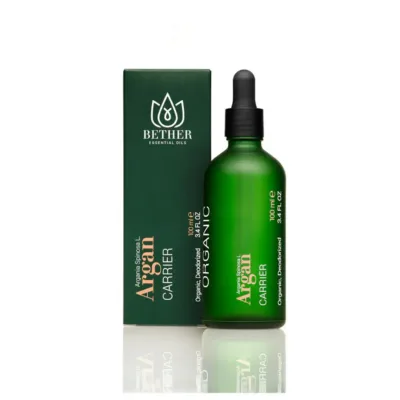
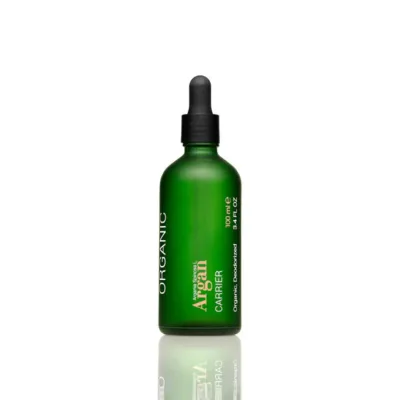
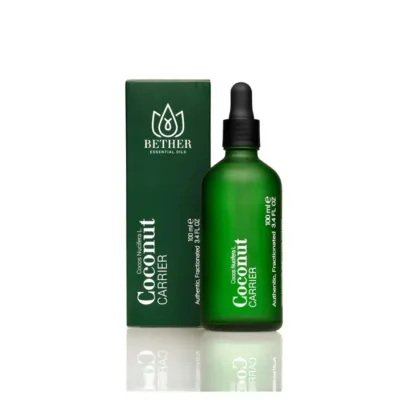
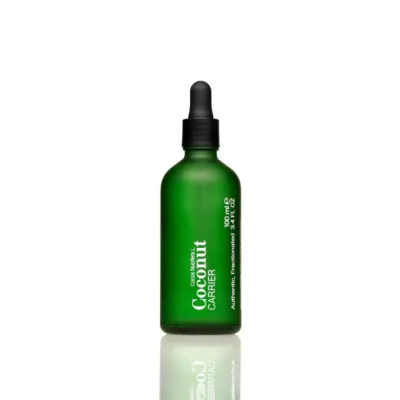
Practically: a carrier oil does this job on its own. Argan oil is unsaturated, with oleic and linoleic acid and tocopherol; fractionated coconut is saturated, has no aroma of its own and does not go rancid. Body lotions are lighter and absorb faster. If you add an essential oil, pregnancy calls for a lower dilution and a conversation with your doctor: the details are in the pregnancy skincare article.
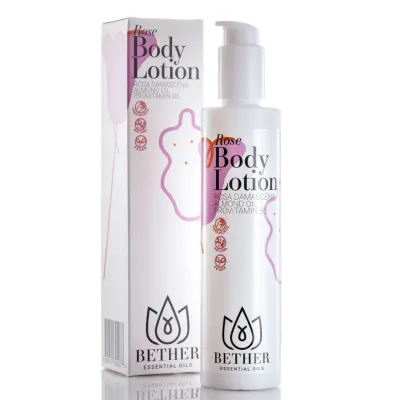
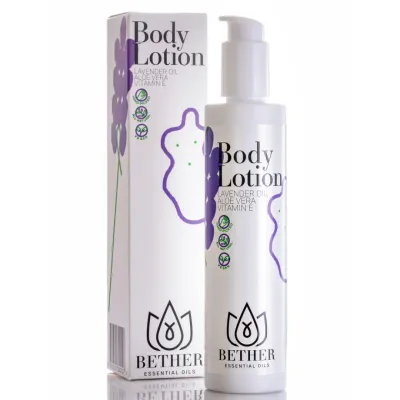
The available carrier oils and body lotions are on the essential and carrier oils page, and the brand’s full range is in the Bether catalogue.
What is worth doing, if a cream does not prevent them
- **Moisturise because it feels good. **Hydration, elasticity and comfort are the real, measured effects. That is reason enough.
- **Do not pay a premium for a promise. **Since prevention is unproven for every product, an expensive “specialist” anti-stretch-mark cream has no demonstrated advantage over a plain body oil.
- **Follow your doctor on weight gain. **It is the only partly modifiable predictor, and it is a medical question, not a cosmetic one.
- **Do not blame yourself. **At 50% to 90% incidence, with age and heredity leading, stretch marks are not a lapse in care.