There are two different reasons an ingredient gets dropped
Most lists put everything in one bucket: “avoid”. That is uninformative, because it merges two very different things. One is an ingredient with a documented risk. The other is an ingredient paused out of caution, because its benefit is cosmetic and the uncertainty is not worth carrying for nine months.
The difference matters for your peace of mind. If you applied something from the second group before you knew you were pregnant, panic is not warranted. And if you are someone who reads labels, the difference lets you make decisions rather than follow a list.
Retinoids: a precaution, not demonstrated harm
Retinoids are paused in pregnancy. That is clear and not up for debate: the American College of Obstetricians and Gynecologists recommends discontinuing all topical retinoids and treats them as a group. Our own retinol page says the same.
What almost nobody says is why. The strictness comes from the systemic retinoid: isotretinoin taken by mouth has a documented teratogenic effect, and that is where the entire fear around the word “retinoid” originates. Applied to skin, however, systemic absorption is negligible, and the human data is reassuring.
What the available data shows
Two published cohorts followed outcomes in women exposed to a topical retinoid during the first trimester: a Californian study of 106 pregnancies and a European multicentre study of 235 pregnancies. Neither found a single case of retinoid embryopathy, nor an increased risk of spontaneous abortion or major malformations.
The two things sit together without contradiction. The advice to stop is sensible: a retinoid delivers a cosmetic benefit that can comfortably wait nine months, and there is no reason to carry even a small uncertainty needlessly. But if you used retinol before you knew, those numbers are the answer to the question you are afraid to ask. Tell your doctor what you used and when.
Hydroquinone is the different case
If a retinoid is paused out of caution, hydroquinone has a more concrete reason: it is among the cosmetic ingredients with the highest skin absorption. A meaningful share of what is applied does not stay in the skin. That is precisely why it is avoided throughout pregnancy, not only in the first trimester.
The irony is that hydroquinone is usually used against exactly the melasma that pregnancy triggers. Which is why the next part matters: there is something to do instead.
What remains: the ingredients commonly considered suitable
The list is neither short nor a compromise. These ingredients are commonly regarded as suitable during pregnancy:
- Azelaic acid: works on uneven tone, on breakouts, and on rosacea-prone skin.
- Niacinamide.
- Vitamin C.
- Hyaluronic acid and peptides.
Why those three in particular
The first three are not a random set. Vitamin C, niacinamide and azelaic acid are the combination most often suggested for melasma, because they act through different mechanisms and are used together. So the ingredients that remain are precisely the ones that address the most common cosmetic complaint of pregnancy.
If you are looking for specific products, see the catalogue. For the ingredients themselves in detail there are separate pieces in the ingredients library.
Melasma, and the single step that matters most
Melasma is a darkening, usually across the forehead, cheekbones and upper lip. In pregnancy it is reported in roughly 36% to 75% of women, the spread coming from the population studied. It is also the most common cosmetic complaint associated with pregnancy.
The mechanism is twofold, and that is exactly the practical news. Rising oestrogen and progesterone stimulate melanocytes, so hormones pull the trigger. But ultraviolet light is what sustains and deepens the pigment. You cannot stop the hormones. You can stop the ultraviolet.
When to start
Photoprotection started from the first trimester reduces the incidence of melasma. That makes it the highest-yield step in this entire article, and the only one that requires changing nothing else. If you do one thing, do this. For the mechanism of sun damage we have a separate piece on sun damage.
Essential oils: the species matters
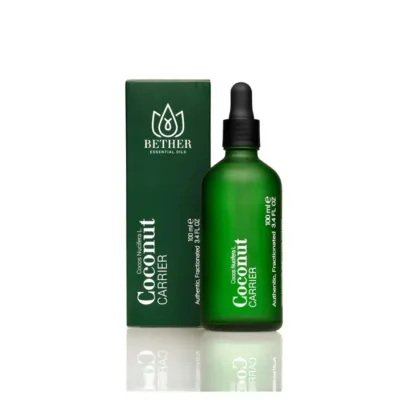
We sell essential oils, so we owe an accurate answer here too. Common practice is to avoid them in the first trimester, and afterwards to dilute to 1% or less rather than the usual 2%. In 20 ml of carrier, 1% is about 4 drops, since one drop is approximately 0.05 ml.
There is a list of oils not used in pregnancy, and species precision is decisive within it. The lavender being avoided is Lavandula stoechas. It is a different species from Lavandula angustifolia, the usual lavender in cosmetics. The same applies to resins: the list contains myrrh, which is not Boswellia carterii frankincense. Check the Latin name, not the marketing name.
Where the data runs out
And the honest limit: concrete scientific data on the toxicity of essential oils in pregnancy is sparse. So practice is precautionary by default. There is no evidence that normal, diluted use of an appropriate oil causes miscarriage; problems arise from excessive, internal or highly concentrated use. But “no evidence of harm” is not the same as “proven safe”, which is exactly why this conversation belongs with your doctor rather than with a label.
For the fundamentals of dilution we have a separate guide: Aromatherapy for beginners.
What the routine looks like in practice
- **Stop the retinoid and hydroquinone. **Without drama. Both can wait.
- **Keep cleansing simple. **High concentrations of salicylic acid go; low concentrations in a rinse-off product carry lower risk.
- **Keep the actives that remain. **Niacinamide, vitamin C, azelaic acid, hyaluronic acid.
- **Sun protection every day. **This is the step that matters most, not the optional last one.
- **Ask your doctor. **About anything unclear. This text does not know your pregnancy.