Why the Type Matters
Most people treat every blemish the same way: with drying, exfoliating and washing as often as possible. The problem is that at least five different conditions hide under one label, and only some of them respond to that approach. The rest either do not change or get worse.
Telling them apart takes a minute in front of the mirror and saves months of wasted effort. Below are the five most common types, how they differ and what actually helps with each.
Blackheads: Not Dirt
A blackhead is an open comedone - a pore blocked with sebum and dead cells whose opening stays wide. The dark colour does not come from dirt. The contents are in contact with air and darken through oxidation, exactly as a slice of apple browns if you leave it on the table.
This explains why more aggressive washing does not remove them. Dirt rinses off in seconds; oxidised sebum inside the pore does not. What helps is consistency rather than force: regular gentle cleansing and ingredients that break down the build-up inside the pore itself.
Oil-soluble acids work here because they reach the inside of the pore, unlike water-soluble ones that act on the surface. There is more on the individual types in our articles on acids in skincare and mandelic acid.
Sebaceous Filaments: Not Blackheads
If your nose has evenly spaced greyish or yellowish dots arranged almost symmetrically, those are most likely not blackheads. Sebaceous filaments are a natural part of how pores are built - they channel sebum to the surface and perform a function the skin needs.
The difference matters for one practical reason: sebaceous filaments cannot be removed permanently. You can squeeze them out and they will disappear for a day or two, but they come back, because pores keep producing sebum. They become more noticeable when sebum production is heavier and less noticeable when the skin is balanced.
How to tell them apart: blackheads have a distinctly dark, almost black head, are unevenly distributed and appear across the face. Sebaceous filaments are lighter, evenly arranged and concentrated on and around the nose. If you have been trying to remove them for years with no result, you are probably fighting anatomy rather than a problem.
Closed Comedones
A closed comedone is the same blockage as a blackhead, but the pore opening is covered by skin. The contents do not oxidise because they are not exposed to air, so it looks like a small flesh-coloured or whitish bump with no inflammation and no pain.
They usually appear in clusters on the forehead, chin or cheeks and give skin an uneven look that you feel with your fingers more than you see. They respond slowly but well to regular exfoliation. Squeezing almost always turns them into an inflamed lesion, because there is no exit and the contents rupture inwards.
Milia
Milia look like closed comedones but are not the same thing. They are small, firm, pearly-white grains, most often around the eyes and on the cheekbones. Inside is keratin trapped under the surface of the skin, not sebum in a blocked pore.
The difference has a direct practical consequence: milia barely respond to acids and exfoliating products. There is no opening for the contents to come out through. They cannot be squeezed either - the skin above is solid and pressure causes injury without the grain coming out.
Milia are removed mechanically by a specialist with a sterile instrument. It is a short procedure and one of the cases where the treatment room does work that home care cannot. Our overview of therapies and protocols shows which procedures include extraction.
Papules and Pustules
Here we are dealing with inflammation. A papule is a red, raised bump, tender to the touch, with no visible white head. A pustule is the same thing but with accumulated contents visible as a white or yellowish point at the tip.
The difference from comedones is substantial. A comedone is a blockage; a papule and a pustule are an inflammatory reaction around that blockage. This is why the approach differs: aggressive drying and frequent exfoliation often worsen inflammation instead of calming it.
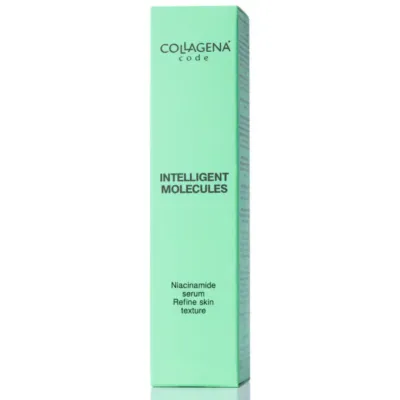
Spot treatment and soothing ingredients work better than drying out the whole face. Niacinamide is among the more sensible choices here - there is more on it in our dedicated article. If you want a ready step-by-step sequence, see the four-step routine.
Why Squeezing Makes It Worse
Squeezing looks like the shortest route and is almost always the longest. Pressure rarely pushes all the contents outwards. Some of it ruptures inwards into the surrounding tissue, where it triggers a stronger inflammatory reaction than the original one.
Two consequences follow. The first is that the lesion becomes larger and lasts longer. The second matters more: the stronger and deeper the inflammation, the more likely it is to leave something behind - a darkened patch or a permanent indentation.
If a blemish keeps returning to exactly the same spot, that is often a sign the previous one was traumatised rather than left alone.
Marks and Scars Are Not the Same
Once inflammation subsides, two different kinds of marks remain, and confusing them leads to unrealistic expectations in both directions.
The first kind is a mark - flat discolouration, pink, reddish or brown, with no change in texture. Run a finger over it and the skin is smooth. This is a trace of pigment and dilated vessels, not destroyed tissue. Marks fade on their own over time, and regular sun protection speeds this up considerably, because ultraviolet light sustains the darkening.
The second kind is a scar - a change in the skin’s texture itself, most often a small indentation. Here tissue has been lost and no cream brings it back. Scars respond only to procedures that stimulate remodelling at depth. This is why the most reliable strategy against them is prevention: the fewer traumatised lesions, the fewer permanent marks.
How Long Each Type Takes
Unrealistic expectations about timing are why most people change products too soon. Different types of blemish move at very different speeds, and this has nothing to do with the quality of the routine.
A pustule usually settles within a few days. A papule takes longer, because the inflammation is deeper and has no route to the surface. Comedones - both open and closed - respond the most slowly of all: here we are talking about weeks of regular exfoliation rather than days, because the blockage breaks down gradually.
Marks run on their own schedule. Reddish marks usually fade within weeks to a few months. Brown marks, where pigment is involved, last longer and depend directly on sun protection - without it the process stalls or reverses. So it is normal for skin to have no new lesions yet still look uneven for a long time afterwards.
The practical rule is to give a new routine at least two months before judging whether it works - provided no new irritation appears in the meantime. Shorter periods show nothing, and frequently switching products is itself a strain on the skin.
Where They Appear and What That Suggests
Where blemishes sit on the face carries some information, but far less than popular “face maps” claim. The idea that a given zone corresponds to a given internal organ has no reliable basis. What the location genuinely suggests is more mundane and more useful.
The nose, forehead and chin have a higher density of sebaceous glands, which is why comedones and sebaceous filaments cluster there. That is anatomy, not a diagnosis. If blemishes concentrate in this zone and are mostly non-inflamed, you are most likely dealing with blockages rather than an inflammatory process.
There are also patterns worth noticing, because they point to an external cause. Blemishes along the jawline and neck that come in cycles are usually linked to hormonal fluctuation. Breakouts exactly where a mask strap, headphones or a helmet sit, or along the hairline with frequent hair products, point to friction and contact rather than to your facial routine.
If the location is strictly one-sided and repeats, the cause is most often contact - a phone, a hand, a pillow. This is the rare case where a change outside skincare gives a faster result than changing a product.
What Cosmetics Can and Cannot Do
Cosmetic products support the skin and improve how it looks. They can reduce the visibility of blockages, help keep sebum balanced, calm redness and support the fading of marks. That is a real and achievable result.
Cosmetics, however, do not treat. They are not intended to address a medical condition and cannot replace therapy prescribed by a doctor. The distinction is not a formality - it determines when it makes sense to wait for a product to work and when waiting only loses time.
One thing that often gets missed: a damaged barrier makes almost every type of blemish worse. Skin that has been dried out produces more sebum in response, and inflammation settles more slowly. Restoring the barrier is therefore not the opposite of caring for blemish-prone skin - it is part of it.
How this mechanism works is described in our articles on the skin barrier and on the lipids that maintain it.
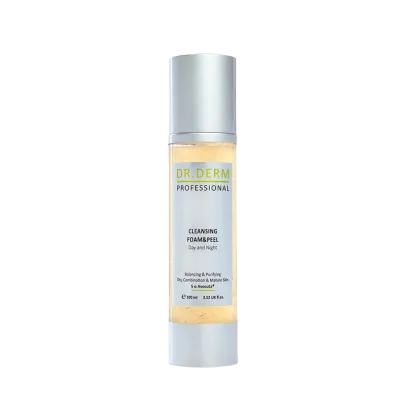
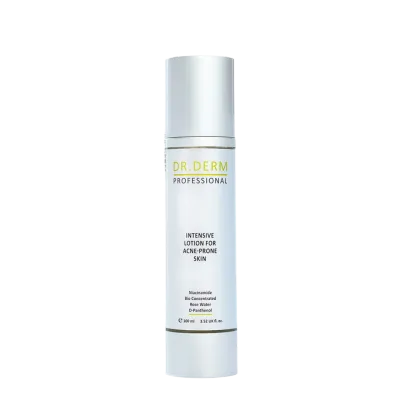
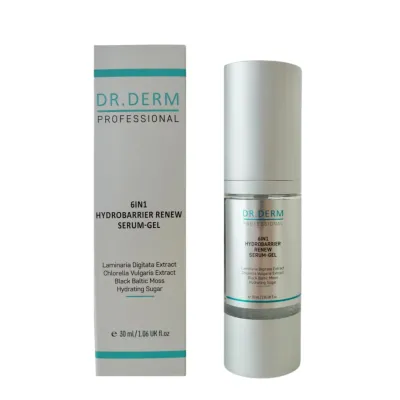
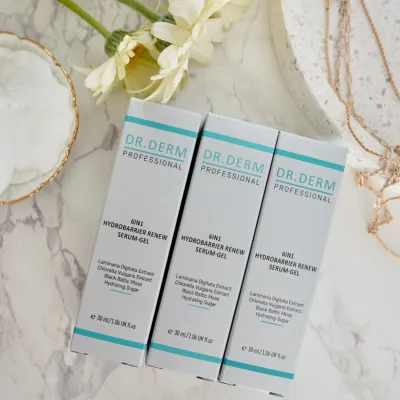
The products above are for home care and can be found in our home care catalog; by type you can browse cleansers and face serums. Salon formulas are in the Collagena Professional® catalog. If you are unsure where to start, our guide to choosing care sets out the steps, and current offers are in the promotions section.
When to See a Dermatologist
There are situations where changing your cosmetics is not the right next move. If lesions are deep, painful and unresponsive for months, if they leave indentations, if they cover a large part of the face or back, or if they appear suddenly and heavily with no clear cause - the conversation is with a dermatologist.
This is not a sign that your routine is wrong. Some conditions simply require treatment, and cosmetics remain useful alongside it - for maintaining the barrier and for skin comfort between procedures.
This content is for educational purposes and does not replace professional advice. Cosmetic products support the appearance of the skin and are not intended to treat medical conditions. For persistent or severe skin concerns, consult a dermatologist.