Why Plain Collagen Does Not Penetrate
The collagen molecule is very large. The skin barrier is built to stop substances of exactly that size, and it does so well. So a cream with whole collagen does not deliver collagen into your skin.
That does not make it useless. Collagen on the surface holds moisture and leaves skin softer and tauter to the touch. The effect is simply superficial and temporary rather than structural.
What Hydrolysis Changes
Hydrolysis breaks the large molecule into much shorter fragments called peptides. Those fragments are small enough to reach further in than whole collagen, which is the main practical difference between the two.
An important clarification: those peptides do not reassemble into collagen in your skin. The idea is different - certain peptide sequences can act as a signal that prompts cells toward their own production.
The link with peptides
In essence a collagen hydrolysate is a mixture of peptides. If the subject interests you, the mechanism of signal peptides is covered in more depth in our article on peptides.
What the Research Shows
For topical application, research reports above all improved hydration and better skin appearance within a few weeks. That is the best-supported part of the claims made for collagen peptides.
Data on increased collagen density in skin comes mostly from oral-intake studies, frequently funded by supplement manufacturers. Transferring those figures to a topical product is not sound, which is why we quote no specific percentages here.
The Bulgarian Patented Hydrolysate
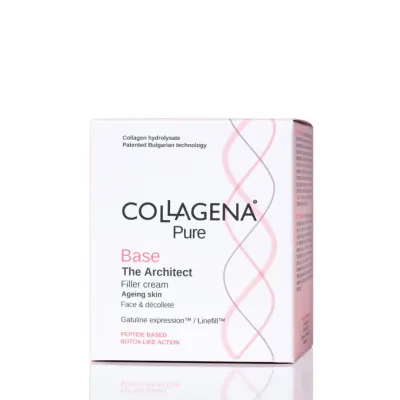
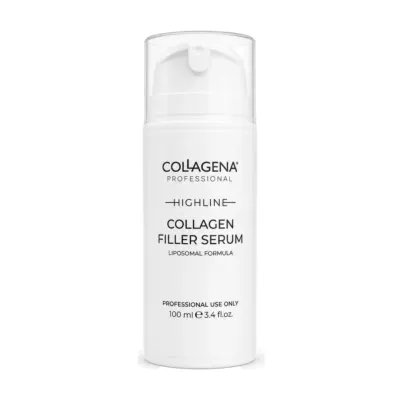
The collagen hydrolysate in Collagena Professional® products is made using a patented Bulgarian technology. According to the manufacturer, it reaches a purity level of 99.5%, meaning very little residual impurity in the raw material.
Higher purity is an advantage for raw-material quality. It does not, however, guarantee that nobody will react to the product: sensitivity is individual and depends on the whole formula, not one ingredient. If your skin is reactive, patch test.
Cream or Supplement
These are two different approaches with different evidence behind them. Peptides taken orally are broken down in digestion and the body uses them according to its own needs, without directing them specifically to skin.
A topical product works where it is applied but reaches less deeply. Neither route gives a dramatic result on its own, and combining them does not double the effect.
Common Misconceptions
The first is that a collagen cream “replaces” lost collagen. It does not. The second is that the result is permanent - it is not; it holds while you use the product.
The third is that the collagen source changes everything. Marine, bovine or otherwise, after hydrolysis the difference for skin is small. What matters is peptide size and the formula as a whole. If proven anti-ageing effect is your main goal, retinol remains the stronger choice.
How to Use It
Morning, evening or both, on slightly damp skin, before a richer cream. The ingredient is well tolerated, needs no adjustment period, does not make skin sun-sensitive and combines with everything else in a routine.
How to Spot It in a Formula
On an ingredient list you will see hydrolyzed collagen, and sometimes a source indication such as marine collagen. If you see only collagen, it is probably the non-hydrolysed form, which stays on the surface.
Position on the list hints at quantity. A hydrolysate in the first half is usually present at a working level; at the very end it is more for the label. Molecular weight is almost never declared, though that is exactly what determines how far the peptides reach.
Who It Makes Sense For
Dry and mature skin, where improved hydration and a plumper feel are most noticeable. The ingredient is well tolerated by sensitive skin and needs no adjustment period, which makes it convenient for people who cannot handle stronger actives.
If you expect a visible change in deep lines or sagging, a collagen hydrolysate will not deliver it. It improves how skin looks and feels, which is a real but more modest job.
What to Expect, and When
Softer, better-hydrated skin usually within two to four weeks. The sense of firmer skin and a more even surface comes more slowly, around the second month of regular use.
The result depends on how long you use it, not how much. More product at once speeds nothing up; it only empties the bottle faster.